


🌘
Scientists have engineered tobacco plants to produce five psychedelic compounds that are normally found in a wide range of natural sources, including psilocybin mushrooms, ayahuasca, and toads, according to a study published on Wednesday in Science Advances.
The breakthrough could lead to more sustainable and scalable production of these compounds by using model plants to biosynthesize common psychedelic “tryptamines,” such as psilocybin from hallucinogenic mushrooms, N,N-Dimethyltryptamine (DMT) from plants, and psychoactive compounds secreted by the Sonoran Desert toad.
Eventually, this research could pave the way toward—as one example—tomato plants that contain microdoses of psychedelic cocktails in each fruit. However, the study’s authors emphasized that these modified plants would need to be limited to medical use in clinical settings, and should not be accessible to consumers for recreation.
“We are interested in this, not because of the recreational effects, but because of the medicinal potential,” said Paula Berman, a postdoctoral researcher at the Weizmann Institute of Science who co-led the study, in a call with 404 Media.
“This combination of five psychedelics—I don’t think anyone has ever tried something like it,” added senior author Asaph Aharoni, principal investigator and head of the department of plant and environmental sciences at the Weizmann Institute of Science, in the same call.
Tryptamines are a subclass of metabolites—compounds produced by metabolic processes in organisms—which have wide-ranging potential as treatments for conditions such as depression, anxiety, mood disorders, and post-traumatic stress disorder.
Indigenous cultures in many regions have cultivated tryptamines for thousands of years for ritual, spiritual, and therapeutic purposes. These compounds are now in high demand as both recreational drugs and medicinal treatments, though legal regulations governing their use vary widely around the world.
Due to their growing popularity, many of the source organisms that produce these compounds are facing significant ecological stresses in the wild; for example, the Sonoran Desert toad population is rapidly declining due to poaching and over-harvesting. Scientists have produced synthetic versions of some tryptamines, but those methods often involve complicated processing steps and hazardous reactants that generate chemical waste.
To help alleviate these problems, Berman, Aharoni, and their colleagues reconstructed the biosynthetic pathways in five tryptamines: Psilocin and psilocybin, both found in hallucinogenic mushrooms; DMT, which is the psychoactive part of ayahuasca; and the psychedelic compounds bufotenin and 5-methoxy-DMT secreted by the Sonoran Desert toad.
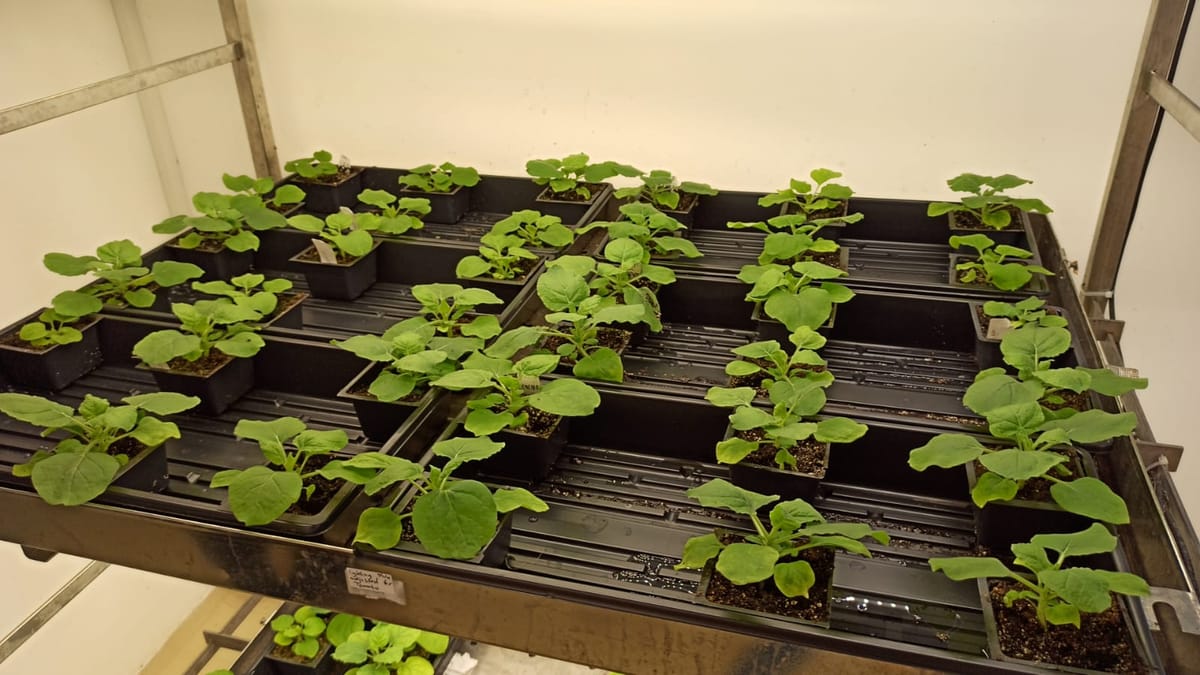
The team then inserted the active genes of these pathways into the leaves of a tobacco plant, creating a botanical platform to produce all five psychedelics. By design, the modified plants are not able to pass these genes onto future generations, as this study is intended to offer a “proof of concept,” Berman said.
“In one leaf, we get five different psychedelics from three different kingdoms,” said Aharoni. “But since it is not inherited, it will stay in the leaves and will not go through to seeds, flowering, pollination, and to the next generation.”
“One reason that we did that is we are still not sure if we want to make plants where everybody can grab seeds from us and grow a plant with five different compounds” that might be deadly, he added. “We have to make sure that it stays in research.”
With that caveat, the team hopes that their work could lead to a method of tryptamine biosynthesis that could help meet the global demand for these compounds. In addition to sidestepping the disadvantages of synthetic versions, this technique could also remove stressors on wild populations. The goal is to ensure that wild tryptamine sources can be reserved for use in traditional Indigenous practices.
The researchers are also interested in clarifying the evolutionary purpose of psychedelic compounds for the plants that naturally produce them, which remains mysterious in many cases.
“We understand the importance of the plants, the fungi, and the Sonoran Desert toad, and every species that we discuss in the paper,” Berman said. “One of our motivations was to really understand better what these species do, so that we can mimic what they do.”
“Over-harvesting endangers the natural availability of these species for native peoples and Indigenous groups,” she concluded. “We have so much respect for the knowledge that they provide us, and we just want to add to this knowledge and to be able to produce these in a more sustainable way.”
🌘
