



Close Menu

    Subscribe to Updates

    Get the latest creative news from FooBar about art, design and business.

    What's Hot

    Is a $30,000 GPU Good at Password Cracking?

    April 8, 2026

    GitLab security advisory (AV26-327) – Canadian Centre for Cyber Security

    April 8, 2026

    Heap-based buffer overflow in cw_acd daemon

    April 8, 2026
    Facebook X (Twitter) Instagram
    • Demos
    • Technology
    • Gaming
    • Buy Now
    Facebook X (Twitter) Instagram Pinterest Vimeo
    Canadian Cyber WatchCanadian Cyber Watch
    • Home
    • News
    • Alerts
    • Tips
    • Tools
    • Industry
    • Incidents
    • Events
    • Education
    Subscribe
    Canadian Cyber WatchCanadian Cyber Watch
    Home»News»Google adds ‘Advanced Flow’ for safe APK sideloading on Android
    News

    Google adds ‘Advanced Flow’ for safe APK sideloading on Android

    adminBy adminMarch 21, 2026No Comments3 Mins Read
    Share Facebook Twitter Pinterest LinkedIn Tumblr Reddit Telegram Email
    Share
    Facebook Twitter LinkedIn Pinterest Email


    Google adds ‘Advanced Flow’ for safe APK sideloading on Android

    Google has announced a new mechanism in Android called Advanced Flow, which will allow sideloading APKs from unverified developers for power users in a more secure manner.

    The new system, scheduled to roll out this August, aims to allow installing Android apps from unverified developers while minimizing the risk of malware infections and scams, which caused an estimated $442 billion in losses last year, according to the Global Anti-Scam Alliance (GASA).
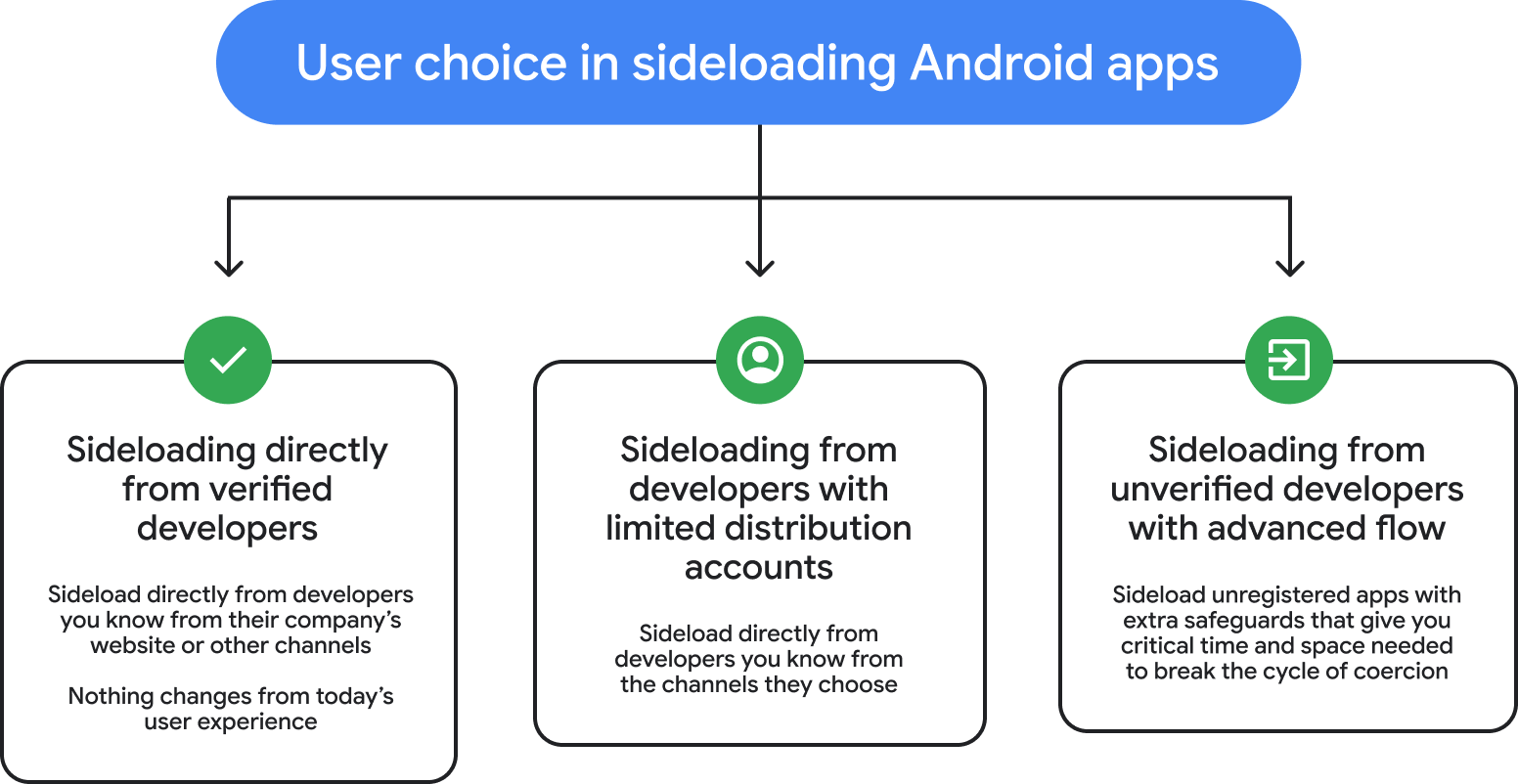
    APK sideloading pathways
    Distinct APK sideloading pathways
    Source: Google

    Power users who want to install APKs on their devices will have to go through a one-time process involving the following steps:

    1. Turn on Developer Mode from system settings
    2. Confirm they are not being coached by threat actors
    3. Restart the phone and reauthenticate
    4. Wait one day and then confirm that the modifications are legitimate

    Then users can install apps from unverified developers and enable them for a week or indefinitely. Android will display a warning that the app is from an unverified developer.
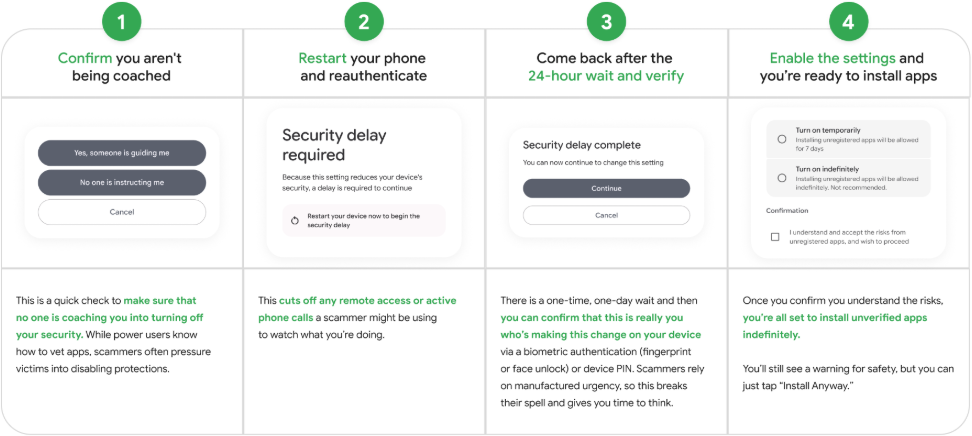
    Overview of the Advanced Flow procedure
    Overview of the Advanced Flow procedure
    Source: Google

    The process is designed to add friction and disrupt typical scamming tactics that trick people into installing unsafe apps on their devices by playing on the urgency of the operation.

    “This flow is a one-time process for power users – it was designed carefully to prevent those in the midst of a scam attempt from being coerced by high-pressure tactics to install malicious software,” explains Google.

    “In these scenarios, scammers exploit fear – using threats of financial ruin, legal trouble, or harm to a loved one – to create a sense of extreme urgency.”

    “They stay on the phone with victims, coaching them to bypass security warnings and disable security settings before the victim has a chance to think or seek help.”

    Google frames the Advanced Flow system as a safe compromise between Android’s openness and user protection, needed for a smooth transition to the new developer verification requirements scheme, first announced last August.

    Developer verification is meant as an anti-malware measure, requiring all Android app publishers, regardless of the distribution method they use, to have their identity verified by Google; otherwise, the installation of their software on certified Android devices will be blocked.

    Although Google retracted the original timeline for applying the new rule after backlash from the community, it didn’t abandon plans to implement the identity verification system.

    This is still coming in August 2026, according to the latest announcement, and app developers are urged to visit this webpage for more information.


    tines

    Malware is getting smarter. The Red Report 2026 reveals how new threats use math to detect sandboxes and hide in plain sight.

    Download our analysis of 1.1 million malicious samples to uncover the top 10 techniques and see if your security stack is blinded.


    Source link

    Share. Facebook Twitter Pinterest LinkedIn Tumblr Email
    Previous ArticleNginx UI – Unauthenticated Backup Download with Encryption Key Disclosure – Research Advisory
    Next Article ZDI-26-217: GIMP PSD File Parsing Integer Overflow Remote Code Execution Vulnerability
    admin
    • Website

    Related Posts

    News

    Is a $30,000 GPU Good at Password Cracking?

    April 8, 2026
    News

    InfoSec News Nuggets 04/08/2026

    April 8, 2026
    News

    Microsoft rolls out fix for broken Windows Start Menu search

    April 8, 2026
    Add A Comment

    Comments are closed.

    Demo
    Top Posts

    Global Takedown of Massive IoT Botnets Halts Record-Breaking Cyberattacks

    March 20, 202619 Views

    Catchy & Intriguing

    March 17, 202619 Views

    The Grandparent Scam: How AI Voice Technology Makes This Old Con Deadlier Than Ever

    March 18, 202617 Views
    Stay In Touch
    • Facebook
    • YouTube
    • TikTok
    • WhatsApp
    • Twitter
    • Instagram
    Latest Reviews
    85
    Featured

    Pico 4 Review: Should You Actually Buy One Instead Of Quest 2?

    January 15, 2021 Featured
    8.1
    Uncategorized

    A Review of the Venus Optics Argus 18mm f/0.95 MFT APO Lens

    January 15, 2021 Uncategorized
    8.9
    Editor's Picks

    DJI Avata Review: Immersive FPV Flying For Drone Enthusiasts

    January 15, 2021 Editor's Picks

    Subscribe to Updates

    Get the latest tech news from FooBar about tech, design and biz.

    Demo
    Most Popular

    Global Takedown of Massive IoT Botnets Halts Record-Breaking Cyberattacks

    March 20, 202619 Views

    Catchy & Intriguing

    March 17, 202619 Views

    The Grandparent Scam: How AI Voice Technology Makes This Old Con Deadlier Than Ever

    March 18, 202617 Views
    Our Picks

    Is a $30,000 GPU Good at Password Cracking?

    April 8, 2026

    GitLab security advisory (AV26-327) – Canadian Centre for Cyber Security

    April 8, 2026

    Heap-based buffer overflow in cw_acd daemon

    April 8, 2026

    Subscribe to Updates

    Get the latest creative news from FooBar about art, design and business.

    Facebook X (Twitter) Instagram Pinterest
    • Home
    • Technology
    • Gaming
    • Phones
    • Buy Now
    © 2026 ThemeSphere. Designed by ThemeSphere.

    Type above and press Enter to search. Press Esc to cancel.