


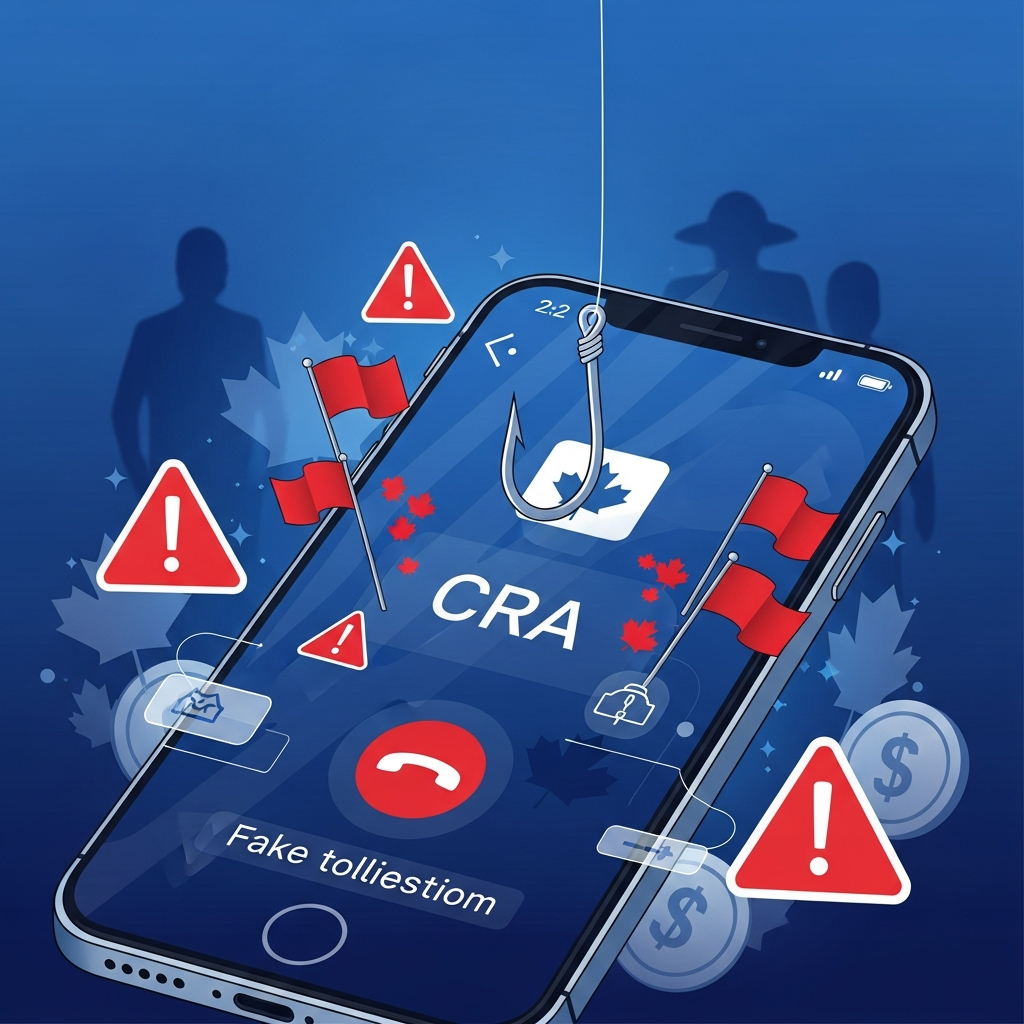
The Call That Almost Cost Sarah Everything
Sarah Chen was rushing to pick up her kids from daycare when her phone rang. The caller ID showed "Canada Revenue Agency" – and her heart immediately sank. She'd been dreading this moment since filing her taxes late last month.
"Ms. Chen, this is Officer Williams from the CRA Enforcement Division," the voice said with practiced authority. "We've detected serious irregularities in your 2023 tax return. You owe $4,847 in back taxes, and we've issued a warrant for your arrest."
Sarah's hands started shaking. A warrant? She pulled over, her mind racing through every line of her tax return. "There must be some mistake—"
"Ma'am, I understand this is stressful, but you need to act immediately," Officer Williams interrupted. "The good news is we can resolve this today if you cooperate. Do you have access to your banking information?"
Something in his tone made Sarah pause. She'd heard about these scams on the news, but this felt so real, so official. Then she remembered: the CRA doesn't call people about arrests. They send letters.
"What's your badge number?" she asked.
The line went dead.
Sarah had just encountered one of Canada's most persistent and profitable scams – and her quick thinking saved her thousands of dollars.
What This Scam Is
CRA scams are fraudulent schemes where criminals impersonate Canada Revenue Agency officials to steal money or personal information. These scammers use fear tactics, fake urgency, and official-sounding language to convince victims they owe back taxes, face arrest, or need to "verify" their information immediately.
The scam has become so prevalent that the Canadian Anti-Fraud Centre receives thousands of reports annually, with Canadians losing millions of dollars to these sophisticated operations.
How the Scam Typically Works
1. The Bait
Scammers contact victims through phone calls, text messages, emails, or even fake CRA websites. They often use spoofed caller ID to make calls appear to come from legitimate CRA numbers. The initial contact claims there's an urgent problem with the victim's taxes, benefits, or account status.
2. The Hook
The fraudster presents a compelling scenario: unpaid taxes, fraudulent activity on the victim's account, or suspended benefits. They use official-sounding language, reference real CRA programs, and may even have some personal information obtained from data breaches or social media to appear legitimate.
3. The Pressure
This is where the scam turns aggressive. The caller creates artificial urgency by threatening immediate arrest, frozen bank accounts, or deportation. They insist the victim must act "right now" to avoid consequences and often instruct them to stay on the line while completing the requested actions.
4. The Payoff
The scammer requests immediate payment through untraceable methods like gift cards, cryptocurrency, wire transfers, or prepaid credit cards. Alternatively, they may ask for personal information like Social Insurance Numbers, banking details, or passwords to "verify the account" – information they'll later use for identity theft.
Red Flags to Watch For
• Immediate payment demands using gift cards, Bitcoin, or wire transfers
• Threats of arrest or police action over tax issues

• Requests for personal information like SIN, passwords, or banking details over the phone
• Pressure to act immediately without giving you time to think or consult others
• Aggressive or threatening tone from supposed government officials
• Requests to stay on the line while you make payments or access accounts
• Caller ID showing "CRA" or government numbers (easily spoofed)
• Unsolicited contact about tax problems you weren't aware of
How to Protect Yourself
Verify independently: If someone claims to be from the CRA, hang up and call the official CRA number (1-800-959-8281) directly. Don't use any numbers provided by the caller.
Know CRA policies: The real CRA will never demand immediate payment by gift cards, threaten arrest over the phone, or ask for personal information via unsolicited calls. They communicate primarily through mail and your secure online account.
Enable account monitoring: Set up a My Account with the CRA online to monitor your actual tax status and receive legitimate communications digitally.
Use multi-factor authentication: Protect your online CRA account with strong passwords and enable two-factor authentication where available.
Stay informed: Follow the Canadian Anti-Fraud Centre and CRA official social media accounts for updates on current scam trends.
Trust your instincts: If something feels wrong or too urgent, it probably is. Legitimate government agencies give you time to respond and multiple ways to verify information.
Real Examples
Phone Call Script:
"Hello, this is Agent Johnson from the Canada Revenue Agency, badge number 4A7B9. Our records show you owe 3,200 in unpaid taxes from 2022. If you don't pay immediately, we'll issue a warrant for your arrest within the next two hours. To avoid this, you need to purchase iTunes gift cards totaling 3,200 and provide the codes over the phone."
Red flags: Immediate arrest threats, payment via gift cards, pressure to act within hours.
Text Message Example:
"CRA URGENT: Your account has been suspended due to suspicious activity. Click here to verify your information immediately or face legal action: [fake link]"
Red flags: Urgent language, suspicious links, threats of legal action via text.
Email Example:
"Dear Taxpayer, We have detected irregularities in your recent tax filing. To avoid penalties of $5,000, please log into your account using the secure link below and update your banking information."
Red flags: Generic greeting, fake urgency, suspicious links requesting login credentials.
Why This Scam Is Increasing
CRA scams surge during tax season when people are already anxious about their filings, but they now operate year-round. Several factors contribute to their growth:
Improved technology allows scammers to easily spoof phone numbers and create convincing fake websites. AI-powered tools help them craft more believable phishing emails and even generate realistic voice calls.
Data breaches provide scammers with personal information that makes their pitches more convincing. When they know your name, address, and other details, their calls seem legitimate.
Economic uncertainty makes people more susceptible to believing they might owe money or face financial penalties. Scammers exploit these fears, especially targeting vulnerable populations like new immigrants or seniors.
Low prosecution rates mean scammers face minimal consequences, especially when operating from overseas call centers.
Expert Insight
Cybersecurity experts emphasize that government agencies have strict protocols for citizen contact. As fraud prevention specialists note, legitimate tax agencies prioritize written communication and provide multiple verification methods. The key insight: real government contact gives you time to verify and respond – it never demands immediate action through untraceable payment methods. When in doubt, always hang up and call back using official numbers from government websites.
What to Do If You’re Targeted or Victimized
If you receive a suspicious contact:
- Hang up immediately and don’t engage further
- Report the incident to the Canadian Anti-Fraud Centre (1-888-495-8501)
- Block the phone number if possible
- Warn friends and family about the attempt
If you've provided information or money:
- Contact your bank immediately to report potential fraud
- Change passwords for all online accounts, especially financial and government services
- Monitor your credit reports for suspicious activity
- File a report with local police and the Canadian Anti-Fraud Centre
- Contact the CRA directly to alert them of the impersonation
If you've shared personal information:
- Consider placing a fraud alert on your credit file
- Monitor all financial statements closely
- Be extra vigilant for identity theft in the coming months
Final Takeaway
Remember Sarah's story: when the government calls with urgent demands, the smartest response is to hang up and call back yourself. The real CRA will never mind waiting while you verify their identity – but scammers always will.
