When I first started writing about online cultures and subcultures almost 10 years ago, one of the first scholars I read on the subject of internet anthropology was Professor Sherry Turkle. Her earlier books, including The Second Self (published in 1984) and Life on the Screen (1995) became something like a model for my own writing and this kind of reporting— approaching the internet with an ethnographer’s mindset and taking nonjudgemental documentation of how people are behaving and feeling in a given space, even if that space is digital.
Through talking directly to people in their own environments, whether they were in MUDs and early virtual chat spaces or Second Life and massive role-playing games, her work revealed endlessly interesting firsthand perspectives on lifestyles that people still found subversive, marginal, and at times perverse. The people she interviewed often said that digital worlds offered support, companionship, sexual satisfaction, gender play and freedom that the quote-unquote “real” world did not. These were topics traditional academia wasn’t yet touching: cyber-sex, intimate relationships unfolding in chatrooms, embodiment in online worlds that felt as real to their inhabitants as the world their physical selves sat in behind a keyboard.
What struck me about those books — and later, in Alone Together, Reclaiming Conversation, and The Empathy Diaries — was often how fundamental the human needs for connection and vulnerability are, despite the technology being used to fulfill those needs.
Fast forward to today. Something has shifted. “In 1984, I called the computer a second self,” Turkle writes in her latest book, Artificial Intimacy: Who We Become When We Talk to Machines. “Computers provoked an explosion of talk about what was essential about being a person and about how new computational ideas might illuminate our thinking about the mind. With the digital twin, the metaphor is turned on its head. It’s the agent who is in charge and imagines a version of you. Now you’re the second self. So when you are given time to get ‘back to your life,’ it’s been diminished.”
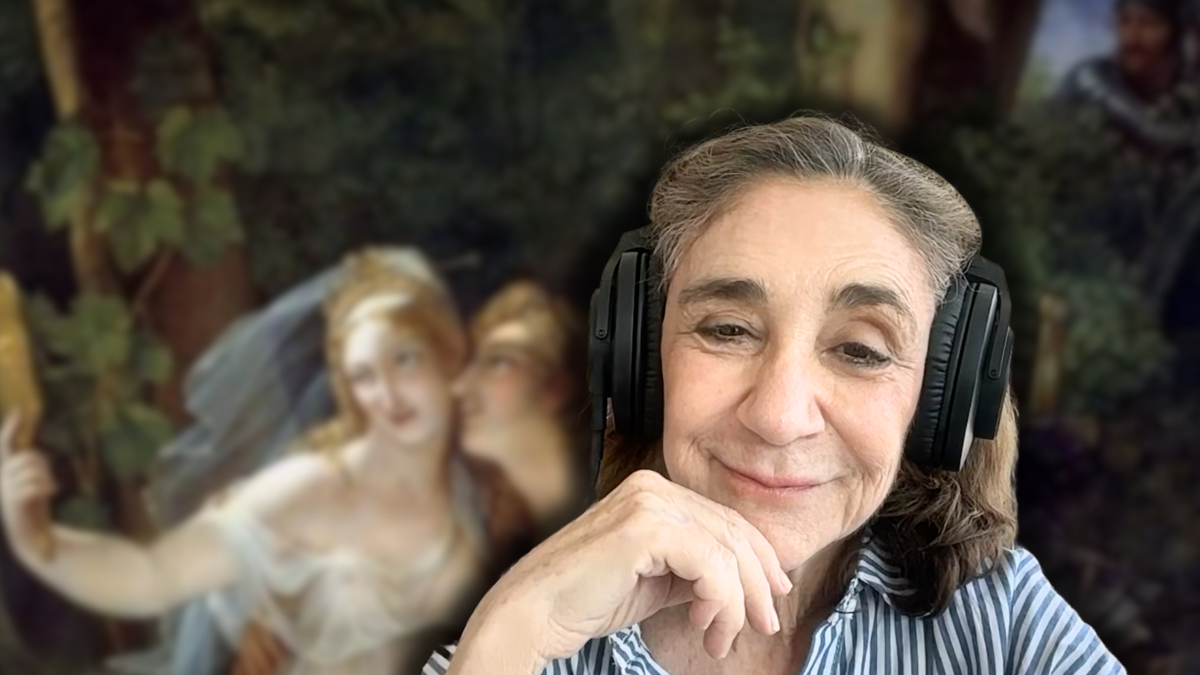
Professor Turkle is a licensed clinical psychologist, the founding director of MIT’s Initiative on Technology and Self, and the Abby Rockefeller Mauzé Professor of the Social Studies of Science and Technology at MIT. Artificial Intimacy: Who We Become When We Talk to Machines comes out on September 29.
The technology today is wildly different than it was in the 80s, but as Professor Turkle explores in our conversation for the 404 Media podcast, the need for empathy, vulnerability, and to feel understood remains central to the human experience. With increasing reliance on conversational “companion” chatbots like ChatGPT and Replika, we risk misinterpreting machine programming as care, and risk misattributing human qualities like empathy and emotional intelligence onto unfeeling, incapable robots. The result, she argues, is a population forfeiting its empathy skills at an alarming rate, trading difficult feelings and conversations with humans for convenience and instantaneous feedback.
“When people turn to a chatbot, they don’t have to dread the fatigue of genuine give-and-take. And they don’t fear judgment or abandonment. But when we talk to chatbots, we lose the skills required to interact with humans, so chatbots start to feel like a better option. With an alternative, disappointment with people feels unnecessary,” Turkle writes.
What happens when people stop caring that there’s not a human on the other line? We got into that on the podcast.
“It’s a product whose fundamental directive is to keep your attention. And so it matters very much that we sort of become glommed onto it as though it were a person when it isn’t,” Professor Turkle said in our conversation. “But more than that, I think that it’s very important to ask, what is the end game of this?” She referred to the interview Mark Zuckerberg gave last year when he said Americans can only have three real friends, and intended to let AI fill in the demand for more.
“Now that to me is a very dark endgame,” she said. “And so people who say, ‘What the hell? I kind of like it.’ Well, let’s just think about where we’re moving towards. Because it’s not just a little entertainment. It’s a corporate project to get us involved in certain kinds of relationships that are going to make tons of money and to keep us at our screens all day talking to sycophantic, seemingly loving entities that don’t know who we are and don’t care about us.”
In our wide-ranging conversation, we talk about how we got here, the concept of “deskilling” one’s own capacity for human connection and vulnerability, whether there’s a way back out of this mess for us, and what happened when she asked a chatbot to roleplay her own legacy (spoiler alert: nothing good).
Listen now wherever you get your podcasts, or watch on YouTube.