



Close Menu

    Subscribe to Updates

    Get the latest creative news from FooBar about art, design and business.

    What's Hot

    Malicious npm packages evade install-script defenses at runtime

    September 20, 2026

    Researchers escape OpenAI Codex sandbox to run commands on host

    September 20, 2026

    Microsoft Teams will let admins block custom file extensions

    September 20, 2026
    Facebook X (Twitter) Instagram
    • Demos
    • Technology
    • Gaming
    • Buy Now
    Facebook X (Twitter) Instagram Pinterest Vimeo
    Canadian Cyber WatchCanadian Cyber Watch
    • Home
    • News
    • Alerts
    • Tips
    • Tools
    • Industry
    • Incidents
    • Events
    • Education
    Subscribe
    Canadian Cyber WatchCanadian Cyber Watch
    Home»News»BambooToken malware controls Windows and Linux systems via MQTT
    News

    BambooToken malware controls Windows and Linux systems via MQTT

    adminBy adminSeptember 15, 2026No Comments3 Mins Read
    Share Facebook Twitter Pinterest LinkedIn Tumblr Reddit Telegram Email
    Share
    Facebook Twitter LinkedIn Pinterest Email


    BambooToken malware controls Windows and Linux systems via MQTT

    A previously unknown malware framework called BambooToken, active since at least 2023, is now using the Message Queuing Telemetry Transport (MQTT) protocol to communicate with Windows and Linux systems.

    The malware adopted MQTT for command-and-control communications in variants developed between 2024 and 2025, compromising servers used by mobile apps, legal and financial services, and software development.

    MQTT is a lightweight messaging protocol primarily designed for IoT (Internet of Things) devices. It relies on a central broker and channels called “topics” to relay messages from publishers to subscribers, rather than using direct communication channels.

    While MQTT is not novel, it is an uncommon approach, and researchers at cybersecurity company ESET documented an unrelated backdoor called MQsTTang in 2023.

    In the case of BambooToken, the infected machine subscribes to topics associated with a unique identifier. The attacker then publishes to those topics the commands to be executed on infected hosts.

    The malware publishes status and system information through the broker and receives operator instructions through subscribed topics.
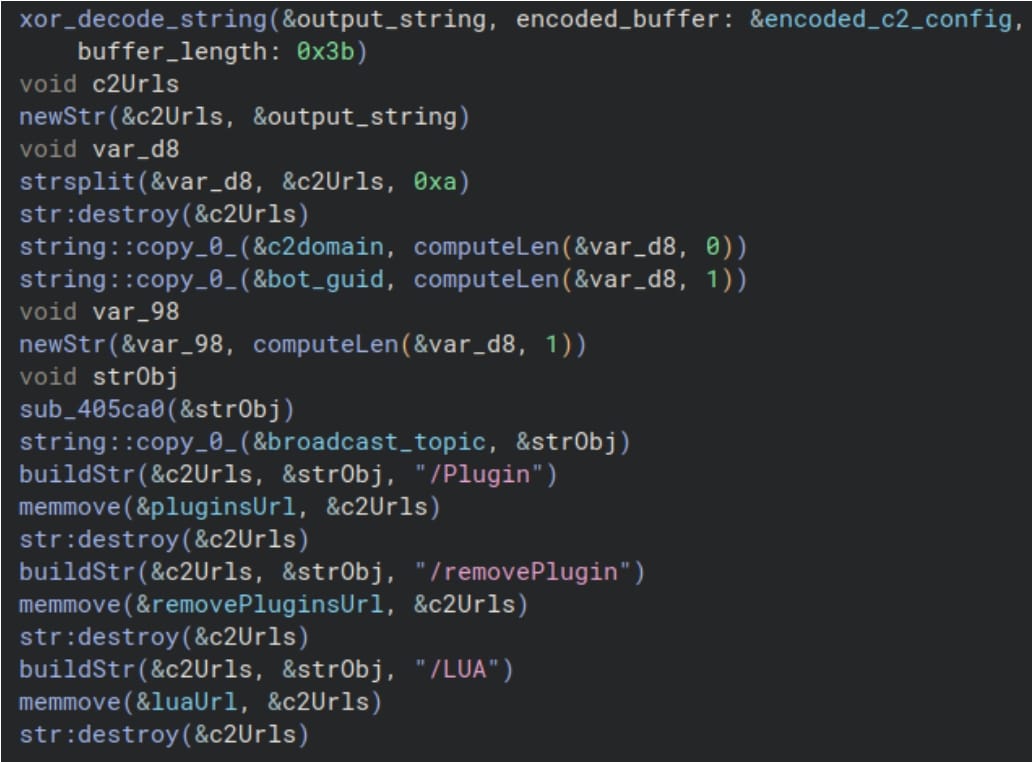
    Hardcoded Topics in the malware code
    Hardcoded Topics in the malware code
    Source: Lumen

    This approach has the advantage that infected systems do not connect directly to the attacker’s infrastructure, which increases evasion and resilience. At the same time, communications can be asynchronous, ensuring operational continuity during temporary network disruptions.

    A report today from Lumen’s research arm, Black Lotus Labs, notes that BambooToken infected systems by side-loading via a digitally signed Tendyron OnKey USB-token software or by impersonating the Kingsoft Office productivity suite.

    The researchers recovered a BambooToken plugin that enumerates antivirus products on infected hosts and returns the results to the C2. They also found strings pointing to keylogging, clipboard theft, audio recording, webcam capturing, and screenshot capturing.

    However, they retrieved these details from “dead code,” meaning the researchers cannot confidently determine if the referenced modules existed and were used in attacks or were still under development.
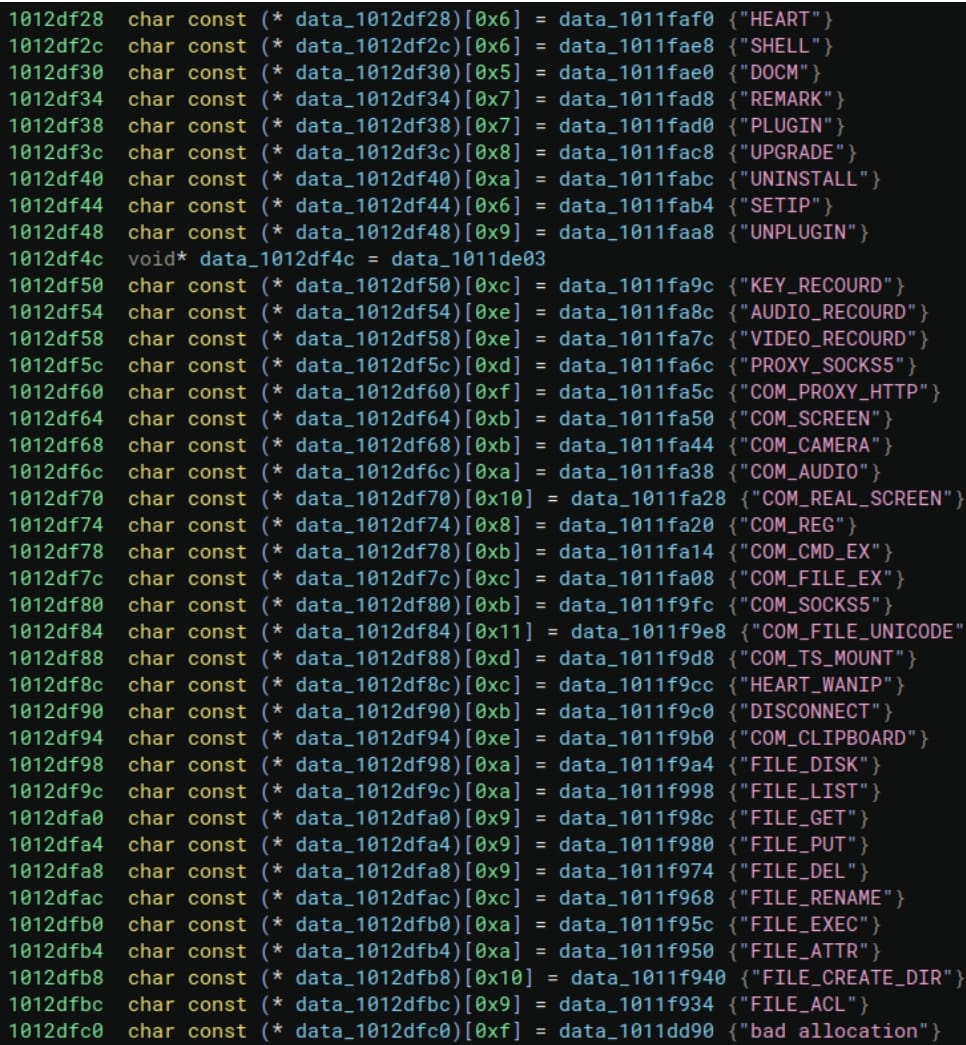
    Strings found in dead code section of .rdata file
    Strings found in dead code section of .rdata file
    Source: Lumen

    The researchers found a Linux variant of the malware, BambooToken version 2.1, as the most recent one (observed in December 2025) that could be linked to the campaign

    It also uses MQTT, collects extensive system information, can spawn a command shell, and allows operators to upload, download, and delete files. However, Black Lotus Labs says that “the Linux sample still appeared to be under development.”

    Lumen’s telemetry identified approximately a dozen compromised enterprise entities, mostly in Asia and South America, including hotels, biomedical firms, law firms, a financial organization, and a cryptocurrency website in Lithuania.

    Additionally, the researchers found that the most compromised servers were associated with the backend infrastructure of mobile applications.

    The threat actor also compromised a GitLab server in Hong Kong, creating a potential foothold for supply-chain attacks.

    Lumen hypothesizes that some of the activity may have targeted overseas Chinese users accessing mainland services through the SpeedCN VPN service.

    Although the researchers could not attribute BambooToken activity to a specific threat actor or a known activity cluster, they note that the targeting patterns are consistent with China-aligned operations.

    Lumen has shared indicators of compromise (IoCs) associated with this activity to help defenders detect and block the attacks.


    article image

    Join Mikko Hyppönen and security leaders from the NFL, CHANEL, and Atlassian for a two-hour digital summit on what AI-speed attacks change, what defenders should stop doing, and how to validate, decide, fix, and re-validate at machine speed.

    Save your seat


    Source link

    Share. Facebook Twitter Pinterest LinkedIn Tumblr Email
    Previous ArticleInfoSec News Nuggets – 09/15/2026 – AboutDFIR
    Next Article UK and allies expose spyware used by Iranian state actors to target dissidents, activists and journalists
    admin
    • Website

    Related Posts

    News

    Malicious npm packages evade install-script defenses at runtime

    September 20, 2026
    News

    Researchers escape OpenAI Codex sandbox to run commands on host

    September 20, 2026
    News

    Microsoft Teams will let admins block custom file extensions

    September 20, 2026
    Add A Comment

    Comments are closed.

    Demo
    Top Posts

    Catchy & Intriguing

    March 17, 202679 Views

    How fraudsters target credit unions

    May 4, 202644 Views

    IP Address Investigations and Local OSINT

    March 20, 202641 Views
    Stay In Touch
    • Facebook
    • YouTube
    • TikTok
    • WhatsApp
    • Twitter
    • Instagram
    Latest Reviews
    85
    Featured

    Pico 4 Review: Should You Actually Buy One Instead Of Quest 2?

    January 15, 2021 Featured
    8.1
    Uncategorized

    A Review of the Venus Optics Argus 18mm f/0.95 MFT APO Lens

    January 15, 2021 Uncategorized
    8.9
    Editor's Picks

    DJI Avata Review: Immersive FPV Flying For Drone Enthusiasts

    January 15, 2021 Editor's Picks

    Subscribe to Updates

    Get the latest tech news from FooBar about tech, design and biz.

    Demo
    Most Popular

    Catchy & Intriguing

    March 17, 202679 Views

    How fraudsters target credit unions

    May 4, 202644 Views

    IP Address Investigations and Local OSINT

    March 20, 202641 Views
    Our Picks

    Malicious npm packages evade install-script defenses at runtime

    September 20, 2026

    Researchers escape OpenAI Codex sandbox to run commands on host

    September 20, 2026

    Microsoft Teams will let admins block custom file extensions

    September 20, 2026

    Subscribe to Updates

    Get the latest creative news from FooBar about art, design and business.

    Facebook X (Twitter) Instagram Pinterest
    • Home
    • Technology
    • Gaming
    • Phones
    • Buy Now
    © 2026 ThemeSphere. Designed by ThemeSphere.

    Type above and press Enter to search. Press Esc to cancel.