


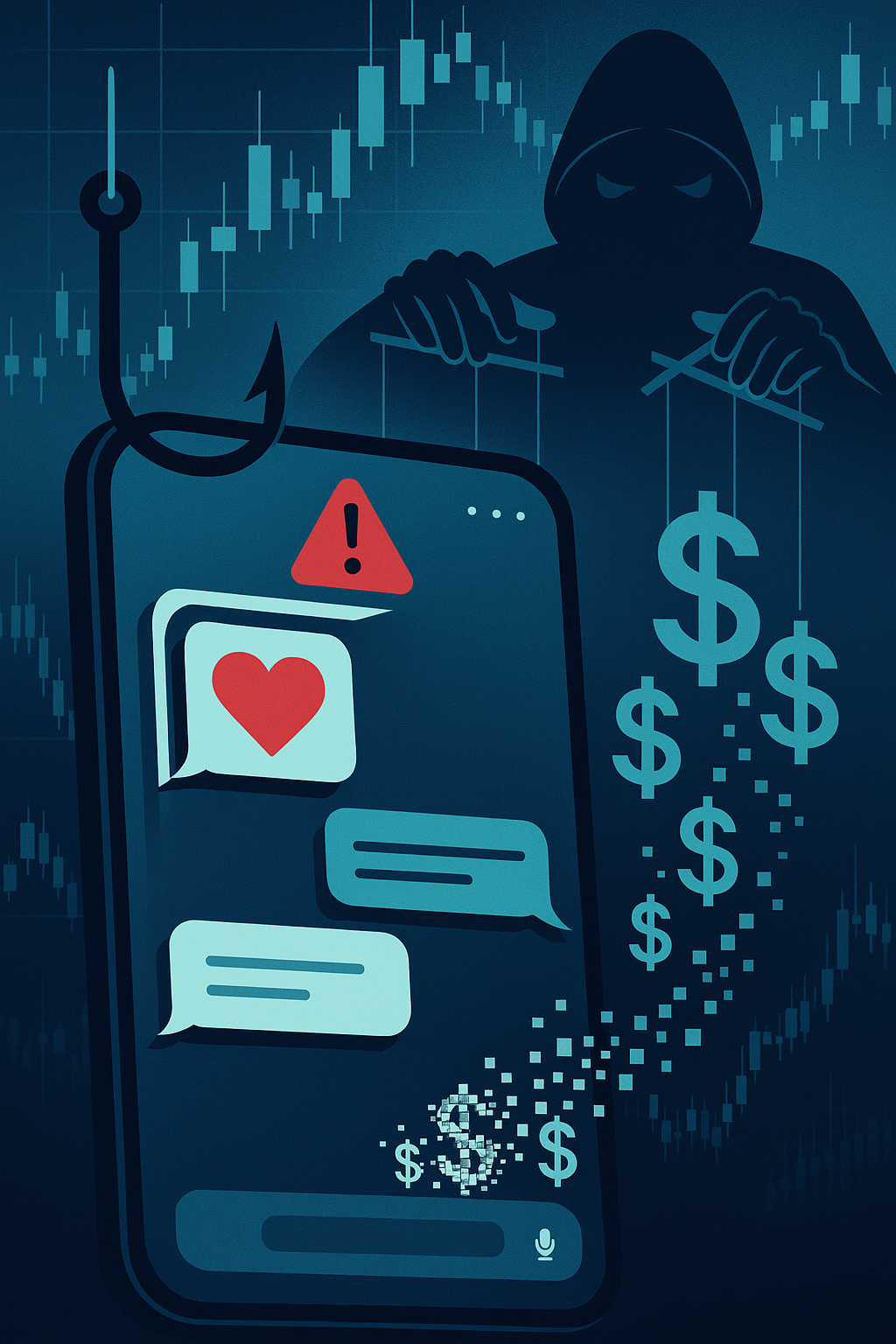
When Love Becomes a Trap
Sarah, a 42-year-old marketing manager from Vancouver, thought she’d finally found someone special. “David” had messaged her on Instagram three months earlier—handsome, successful, and surprisingly attentive. Their daily conversations had evolved from casual chats to deep emotional connections. When David mentioned his success trading cryptocurrency and offered to help Sarah build her retirement fund, she felt grateful to have someone who cared about her future.
It wasn’t until Sarah had transferred $47,000 to what she believed was a legitimate trading platform that a friend’s concerned question made her pause: “Have you ever actually video-called this guy?” The sinking realization that followed would change everything. Sarah had become the latest victim of one of the most devastating scams of the digital age.
What This Scam Is
“Pig butchering” is a cruel but accurate term for a sophisticated long-term fraud that combines romance scams with fake investment schemes. The name comes from the scammer’s strategy: like fattening a pig before slaughter, fraudsters spend weeks or months building trust and emotional connections with victims before manipulating them into making increasingly large financial investments in fake platforms.
Unlike quick-hit scams that rely on immediate pressure, pig butchering operations are patient, methodical, and devastatingly effective. Victims often don’t realize they’ve been scammed until they’ve lost their life savings, retirement funds, or taken on debt to continue “investing.”
How the Scam Typically Works
1. The Bait
Scammers cast a wide net across dating apps, social media platforms, and even through “wrong number” text messages. They use stolen photos of attractive people and craft compelling backstories—often claiming to be successful entrepreneurs, traders, or professionals living abroad. The initial contact appears accidental or organic, making victims less suspicious.
2. The Hook
Once contact is established, scammers invest significant time building genuine emotional connections. They share personal stories, remember important details about victims’ lives, and provide constant attention and validation. This phase can last weeks or months. Eventually, they casually mention their success with cryptocurrency trading, forex, or other investments, often sharing screenshots of impressive returns.
3. The Pressure
After establishing trust, scammers guide victims to fake trading platforms that look remarkably professional. They start with small investments, allowing victims to see apparent profits and even withdraw small amounts to build confidence. Gradually, they encourage larger investments, often creating artificial urgency around “limited-time opportunities” or market conditions.
4. The Payoff (For the Scammer)
Once victims have invested substantial amounts, the fake platforms begin showing losses or technical problems. Scammers may demand additional fees for “taxes,” “insurance,” or “verification” before funds can be withdrawn. Eventually, the scammer disappears, the platform becomes inaccessible, and victims realize their money is gone forever.
Red Flags to Watch For
• Unsolicited contact from attractive strangers on social media or dating apps • Reluctance to meet in person or video chat, with elaborate excuses • Quick progression from casual conversation to deep emotional connection • Casual mentions of investment success or trading profits • Pressure to invest “while markets are hot” or before opportunities disappear • Unfamiliar trading platforms not available through official app stores • Requests to download specific apps or access platforms through provided links • Inability to withdraw funds without paying additional fees or taxes • Encouragement to borrow money or liquidate assets to invest more
How to Protect Yourself
Verify identities rigorously. Insist on video calls early in any online relationship. Use reverse image searches on profile photos to check if they’re stolen from other sources.
Research investment platforms independently. Only use well-known, regulated trading platforms. Check with provincial securities regulators or the Investment Industry Regulatory Organization of Canada (IIROC) before investing through any platform.
Never invest based on someone else’s recommendation alone. Legitimate investment opportunities don’t require immediate action or come through romantic partners you’ve never met.
Set firm boundaries around money. Establish personal rules about never sending money or sharing financial information with people you’ve only met online.
Trust your instincts. If something feels too good to be true or you’re being pressured to act quickly, step back and consult trusted friends or family members.
Verify withdrawal capabilities. Before investing significant amounts, test your ability to withdraw funds from any platform.
Real Examples
Text Message Approach: “Hi Emma, the dinner reservation is confirmed for 7 PM tomorrow. Looking forward to seeing you!” “Sorry, I think you have the wrong number.” “Oh my goodness, I’m so embarrassed! I’m David, by the way. Since I already interrupted your day, mind if I ask what you do for work?”
Red flags: The “wrong number” approach is increasingly common, and the quick pivot to personal questions is suspicious.
Investment Pitch: “I’ve been thinking about your retirement concerns. I made 3,200 just today on the crypto market. My mentor taught me this strategy—it’s really changed my life. Want me to show you how it works? You could start with just 500 to test it out.”
Red flags: Mixing emotional manipulation with investment advice, mentioning a “mentor,” and suggesting specific dollar amounts.
Why This Scam Is Increasing
Pig butchering scams have exploded in recent years due to several converging factors. The COVID-19 pandemic increased online dating and social media usage while leaving many people financially vulnerable and socially isolated.
Cryptocurrency’s mainstream adoption has created a perfect cover for fake investment schemes, as many people are interested but don’t fully understand how legitimate crypto trading works. Advanced technology allows scammers to create convincing fake trading platforms and use AI-generated photos for fake profiles.
The Canadian Anti-Fraud Centre reported that romance scams cost Canadians over $50 million in 2022, with pig butchering representing a growing portion of these losses. International criminal organizations have industrialized these operations, often forcing trafficked workers to run multiple fake relationships simultaneously from compound-like facilities.
Expert Insight
Cybersecurity experts emphasize that pig butchering’s effectiveness lies in its exploitation of fundamental human needs for connection and financial security. Unlike traditional scams that rely on fear or urgency, these operations weaponize trust, patience, and emotional manipulation. The sophisticated nature of modern fake trading platforms makes it increasingly difficult for victims to distinguish legitimate opportunities from elaborate frauds until it’s too late.
What to Do If You’re Targeted or Victimized
If you suspect you’re being targeted, immediately cease all communication and don’t send any money. Document everything—screenshots, messages, and platform details—before the scammer potentially disappears.
If you’ve already lost money, act quickly. Contact your bank or financial institution immediately to report the fraud. File a report with the Canadian Anti-Fraud Centre at 1-888-495-8501 or online at antifraudcentre.ca. Report the incident to local police and consider consulting with a lawyer about potential recovery options.
Remember that being victimized doesn’t reflect poor judgment—these scams are specifically designed to exploit normal human psychology and emotions.
Final Takeaway
In the digital age, the most dangerous predators don’t break down your door—they slide into your DMs with patience, charm, and a long-term plan to empty your bank account.
