


👋 Welcome to OSINT Tool Tuesday. This week we’re looking at EyeDex; a robust open directory search engine designed to help investigators discover publicly accessible files, archives, documents, media, and datasets exposed across the internet. Widely used by researchers, archivists, investigators, and data hoarders, EyeDex indexes massive amounts of publicly accessible directory content and makes it searchable from a single interface.
🚨 This tool has been added to the OSINT Resources for Open Directories page on The OSINT Newsletter for easy reference later. That list serves as a roadmap for new tutorials in the future. If there are any tools you’d like to see added to the list and covered, please reach out to jake@osint.news with details.
🪃 If you missed the last newsletter, here’s a link to catch up.
⚡ You’re Hired: OSINT and Company Intelligence

🎙️ If you prefer to listen, here’s a link to the podcast instead.

Let’s get started. ⬇️
EyeDex is an open directory search engine that indexes publicly accessible web directories and allows users to search across petabytes of exposed files hosted on open servers around the world. It acts as a search layer over open directories, making it easier to locate documents, images, videos, archives, datasets, logs, software, and other files that would otherwise be difficult to discover manually.
🎩 H/T: eyedex
EyeDex allows investigators to search using keywords, file names, file extensions, file groups, indexed server paths, and directory structures.
The platform is especially useful for:
-
Discovering forgotten or abandoned public data.
-
Locating leaked or exposed files.
-
Identifying publicly accessible infrastructure.
-
Finding archived datasets and documents.
-
Pivoting into additional OSINT investigations.
In this guide, I’ll walk you through how EyeDex works, how to search effectively, practical use cases, and additional search techniques to help uncover further results.
Unlike many OSINT tools, EyeDex does not require installation or API access. It’s entirely web-based, so simply open up the EyeDex Search Interface and you’re good to go. (Command-line beginners can collectively breathe a sigh of relief!)

Before using EyeDex effectively, it helps to understand what “open directories” actually are.
An open directory is a publicly accessible web server directory listing where indexing or browsing has been enabled accidentally or intentionally. These often expose PDFs, ZIP archives, videos, source code, backups, configuration files, images, logs, and datasets.
In many cases, these directories were never intended to be publicly searchable. EyeDex indexes these locations and makes them searchable from a central interface.
Note: As always, just because a file is publicly accessible doesn’t mean you should download, distribute, or misuse it. Always operate legally and ethically.
Now that we’ve covered the basics, let’s dive into how to actually use EyeDex during investigations.
The best place to start is by searching for keywords. You could try a company name, username, project codename, email domain or file name to name but a few.
Example: osint
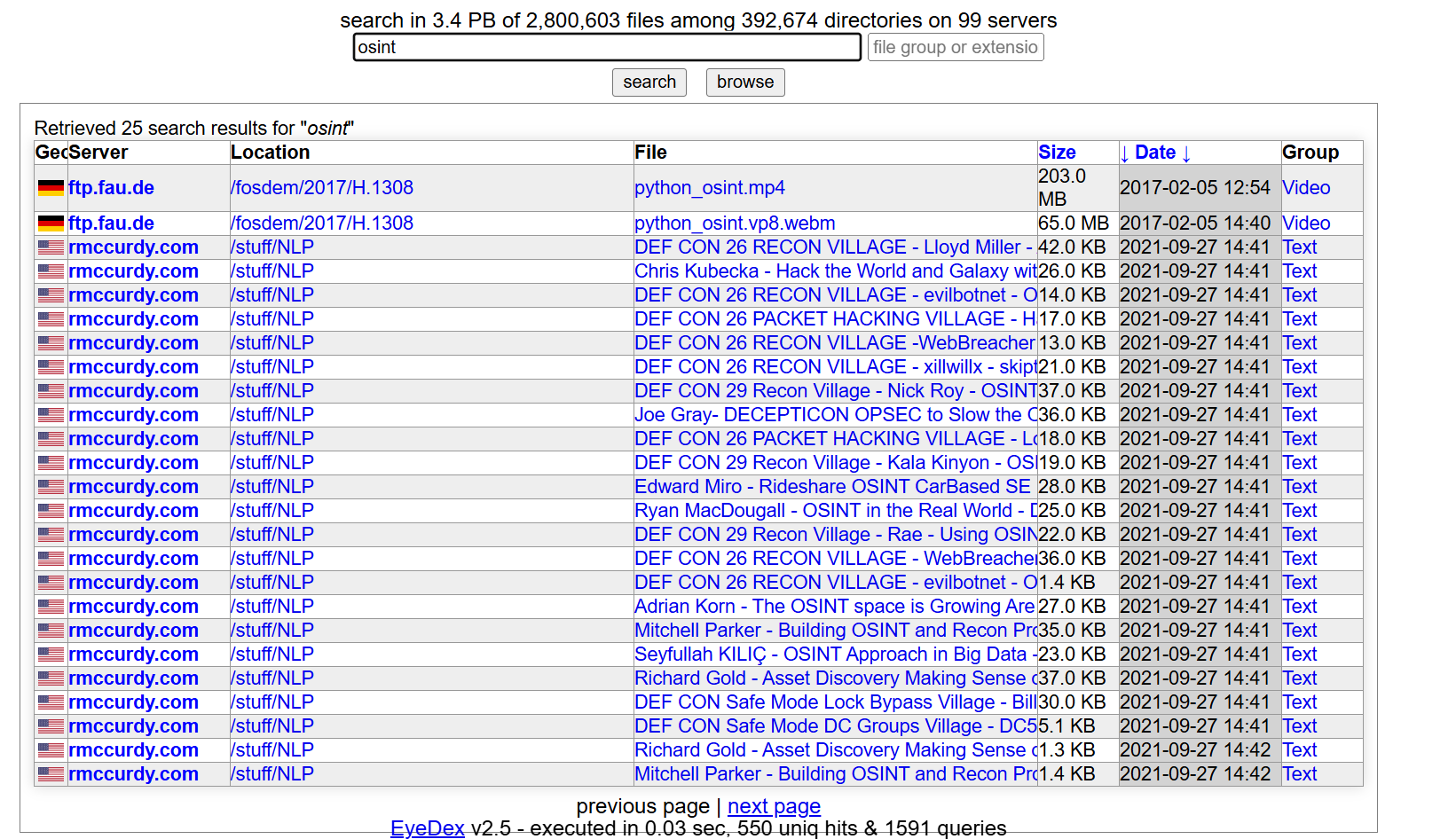
This may uncover exposed PDFs, archived backups, spreadsheets, internal documentation etc.
As you can see, search results typically include file name, server, location, file size, modification group, and file category e.g. ‘video’ or ‘text’.
🗒️ This is the best starting point for broad reconnaissance.
One of EyeDex’s most powerful features is searching by file extension e.g. pdf, sql, txt, log, json, csv etc. You can also combine keywords with extensions.
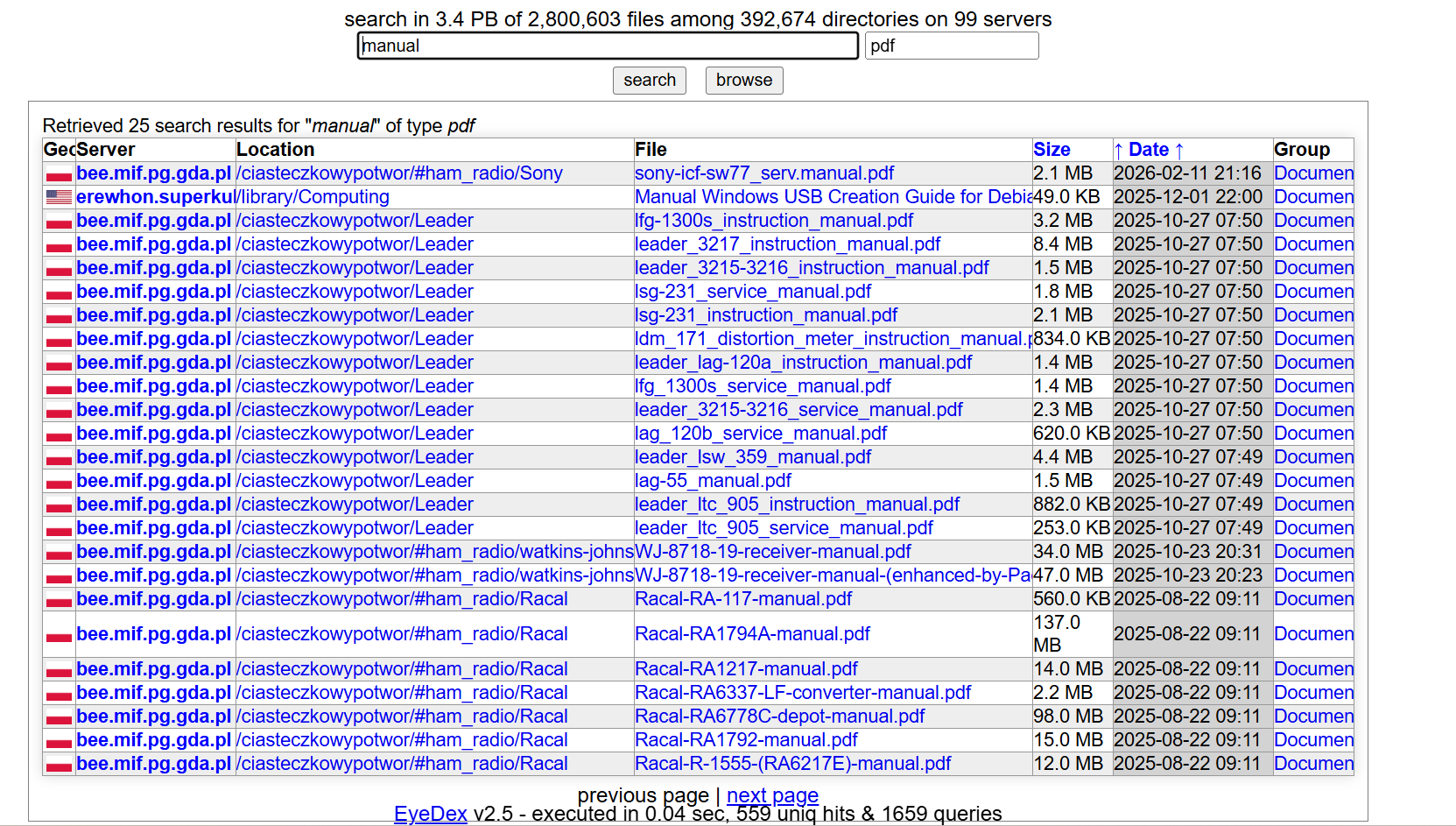
Example: Manual pdf
This is of course a very wide search query but you can see how it pulls up more recent pdf manuals. Using this feature can help narrow investigations toward specific file types.
🗒️ Extremely useful for identifying accidental data exposure.
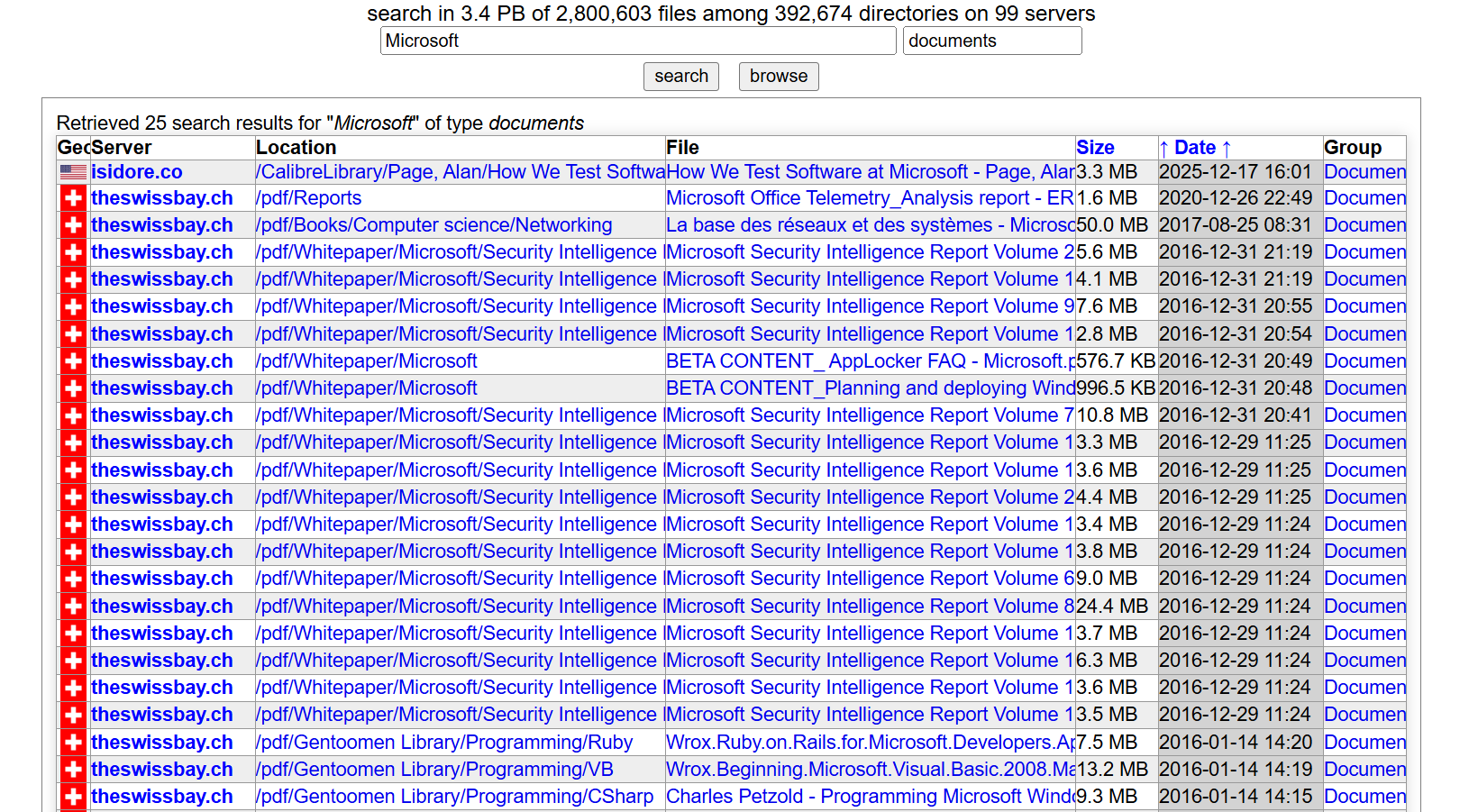
EyeDex allows filtering by file groups/categories including documents, archives, pictures, text and video. This makes it easier to quickly pivot toward the type of content you’re investigating.
Example workflow:
One underrated feature of EyeDex is the ability to pivot into entire exposed directory structures. Once you identify a useful result, you can inspect adjacent folders, browse sibling directories, identify naming conventions, and uncover additional hidden files.
This often reveals:
-
staging environments
-
old backups
-
developer files
-
forgotten exports
-
archived media
🗒️ Many investigations expand significantly through directory pivoting rather than the initial keyword search itself.
EyeDex allows sorting by date (and time), helping investigators identify recently modified files, fresh uploads, newly exposed data, and active infrastructure.
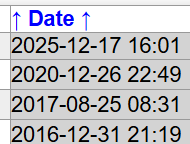
It may be a simple feature but this is especially useful during breach monitoring, leak investigations, threat intelligence monitoring, and ransomware tracking.
Because search results expose server paths and hostnames, EyeDex can also support infrastructure investigations.
Results may reveal subdomains, internal naming conventions, CDN structures, storage buckets, legacy infrastructure, and mirrored servers.
These become valuable pivot points into:
-
DNS investigations
-
Shodan searches
-
Certificate analysis
-
Passive DNS
-
Attack surface mapping
EyeDex is essentially a public file discovery and exposed infrastructure reconnaissance tool.
A key feature is its ability to support structured exploration of results and build a clearer picture from scattered publicly available information.
So where exactly is this tool useful in OSINT?
This is arguably the primary use case as EyeDex can help investigators locate exposed backups, exported databases, internal documents, logs, and misconfigured storage. This can support breach investigations, attack surface monitoring, corporate reconnaissance, and vulnerability research.
Threat researchers can use EyeDex to identify leaked datasets, locate malware samples, discover exposed infrastructure, uncover staging servers, and track threat actor file hosting. Open directories are frequently used for malware hosting, phishing kits, leaked credential storage, and pirated tooling.
Note: Always exercise caution when interacting with downloadable content.
EyeDex is also widely used by archivists and researchers looking for old software, datasets, scanned books, historical archives, and niche media collections. The open directory community has long used similar indexing techniques for archival discovery.
Security teams and investigators can use EyeDex to identify exposed internal documents, forgotten staging environments, publicly accessible backups, and leaked configuration files. This makes the tool valuable for red teaming, attack surface management, and external exposure assessments.
When using open directory search engines:
-
Never execute unknown files directly.
-
Avoid downloading executables from untrusted sources.
-
Use isolated analysis environments/sandboxes.
-
Verify hashes when possible.
-
Treat exposed files as potentially malicious.
The wider OSINT and open directory community frequently warns about operational security risks associated with random downloads from exposed servers so in big, bold letters, EXERCISE CAUTION.
Here are a few practical ways investigators improve EyeDex searches:
sql
csv
company confidential
backup zip
bak
jdoe
vpn config
access.log
error.log
Use file group filters to narrow results quickly.
✅ That’s it for the free version of The OSINT Newsletter. Consider upgrading to a paid subscription to support this publication and independent research.
By upgrading to paid, you’ll get access to the following:
👀 All paid posts in the archive. Go back and see what you’ve missed!
🚀 If you don’t have a paid subscription already, don’t worry. There’s a 7-day free trial. If you like what you’re reading, upgrade your subscription. If you can’t, I totally understand. Be on the lookout for promotions throughout the year.
🚨 The OSINT Newsletter offers a free premium subscription to all members of law enforcement. To upgrade your subscription, please reach out to LEA@osint.news from your official law enforcement email address.
