




WhatsApp is finally allowing users to reserve usernames, a privacy feature that lets them hide their phone numbers from people not in their contact list.
Meta says that more than 3 billion people in over 180 countries use WhatsApp’s instant messaging and video-calling platform, which started as an alternative to the Short Message Service (SMS) on mobile devices.
Users will also be able to set an optional key that others will need to know before messaging them via the new username.
“Starting this week, you can reserve a username to use later this year when we launch this feature. With over three billion people on WhatsApp a lot of names overlap, which is why we’re opening reservations early so everyone has the opportunity to select the username that matters to them,” the company said in a Monday announcement.
“Usernames are our latest step to make WhatsApp even more private. There’s no directory to browse and no suggestions – people will need to know your exact username to contact you for the first time. To help control who can reach you on WhatsApp with your username, we’ve built an optional username key that others will need to know to message you.”
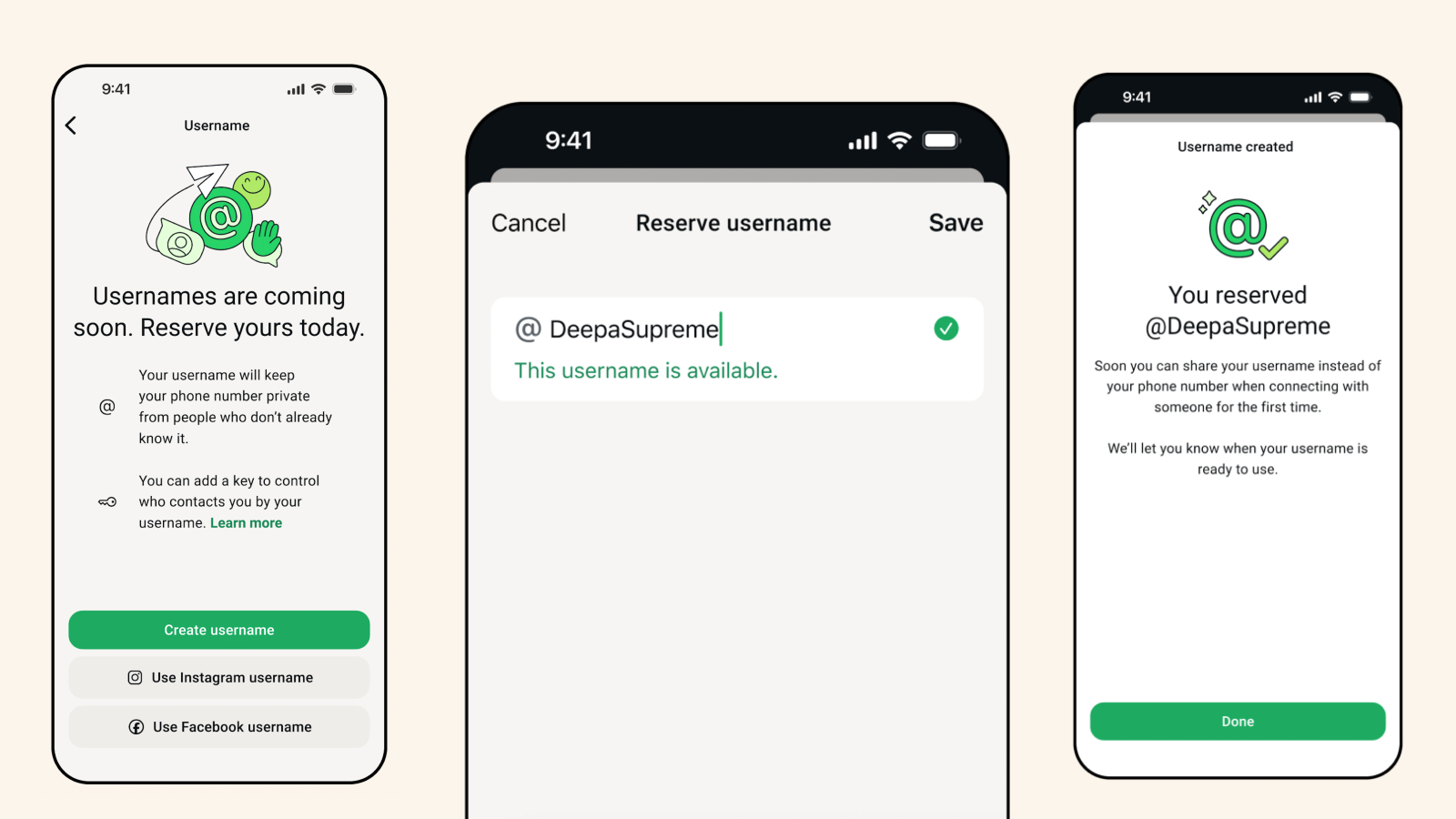
The new usernames feature is rolling out gradually over the coming months, and users will be notified when it’s available in their country.
To reserve a username before the rollout reaches your country, go to Settings > Account > Username after updating to the latest version of WhatsApp.
Once the new username becomes active, people who don’t have your phone number in their contact list will see your username instead.
You can also change the reserved username or delete it at any time, but doing so will allow others to claim it.
Meta also added that some usernames are held for governments, public figures, and businesses, and can’t be claimed by other users.
The Signal encrypted messaging service has been allowing users to choose a custom username since February 2024, following a public test phase that began in November 2023.

Security teams log 54% of successful attacks and alert on just 14%. The rest move through your environment unseen.
The Picus whitepaper shows how breach and attack simulation tests your SIEM and EDR rules so threats stop slipping by detection.
