


🌘
Ancient fossils have revealed that the earliest animals to walk on land more than 300 million years ago did not experience a metamorphosis similar to modern amphibians, a discovery that rewrites the evolutionary history of terrestrial vertebrates, according to a study published on Thursday in Science.
Humans and all other land-dwelling vertebrates descend from four-limbed “tetrapods” that left the seas to roam on land, an evolutionary process that took tens of millions of years. If you can recall your old biology textbook, this is probably what you were taught it looked like: the pioneering tetrapods adapted to land with a life cycle similar to frogs and toads, in which an aquatic larval phase, like a tadpole, is followed by metamorphosis into an amphibious adult form.
A pair of scientists at the Field Museum in Chicago looked at extremely rare fossils of hatchlings that span the “fin-to-limb” transition to identify direct evidence of this metamorphosis, such as the type of external gills seen on tadpoles. To their surprise, the researchers found no evidence of a transient larval phase in the early animals, thereby “falsifying hypotheses of an ancestral origin of metamorphosis,” according to the new study.
“There’s still this sense that these [tetrapods] had this gilled larva that is fundamentally and anatomically different from the terrestrial adult,” said Jason Pardo, a research associate at the Field Museum and a postdoctoral fellow at Vilnius University in Lithuania who co-led the study, in a call with 404 Media. “There are a lot of reasons why that would make sense, because it’s easier to make that transition from water to land if your baby, when it hatches out of the egg, is still fish-like, more or less. Then, you have this period of transition that allows it to get itself on land.”
“The problem is that we’ve never actually had direct evidence of that,” he continued. “The assumption has always been, ‘Of course we had a larval stage, and it would transition into an adult.’ But we didn’t really have information that went one direction or the other.”
To fill this gap, Pardo and Arjan Mann, the Field Museum’s assistant curator of early tetrapods and the other co-lead of the study, scoured both public museum archives and private collections for fossils that captured the early hatchling phase of primordial tetrapods.
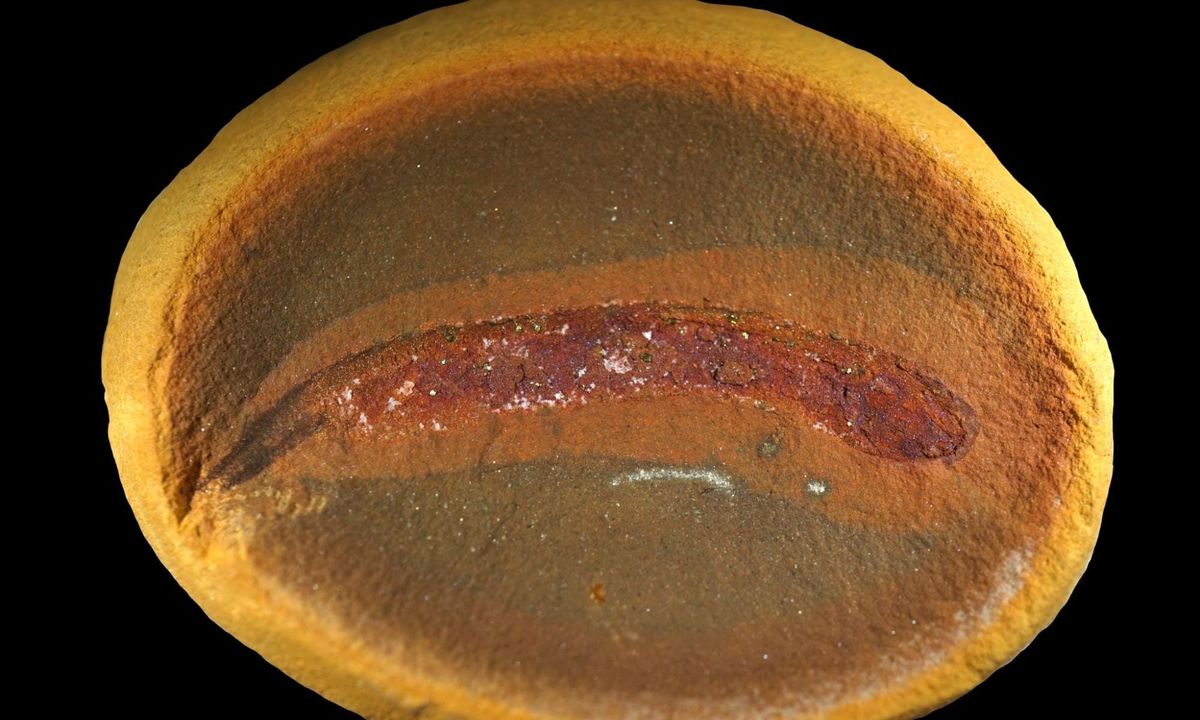
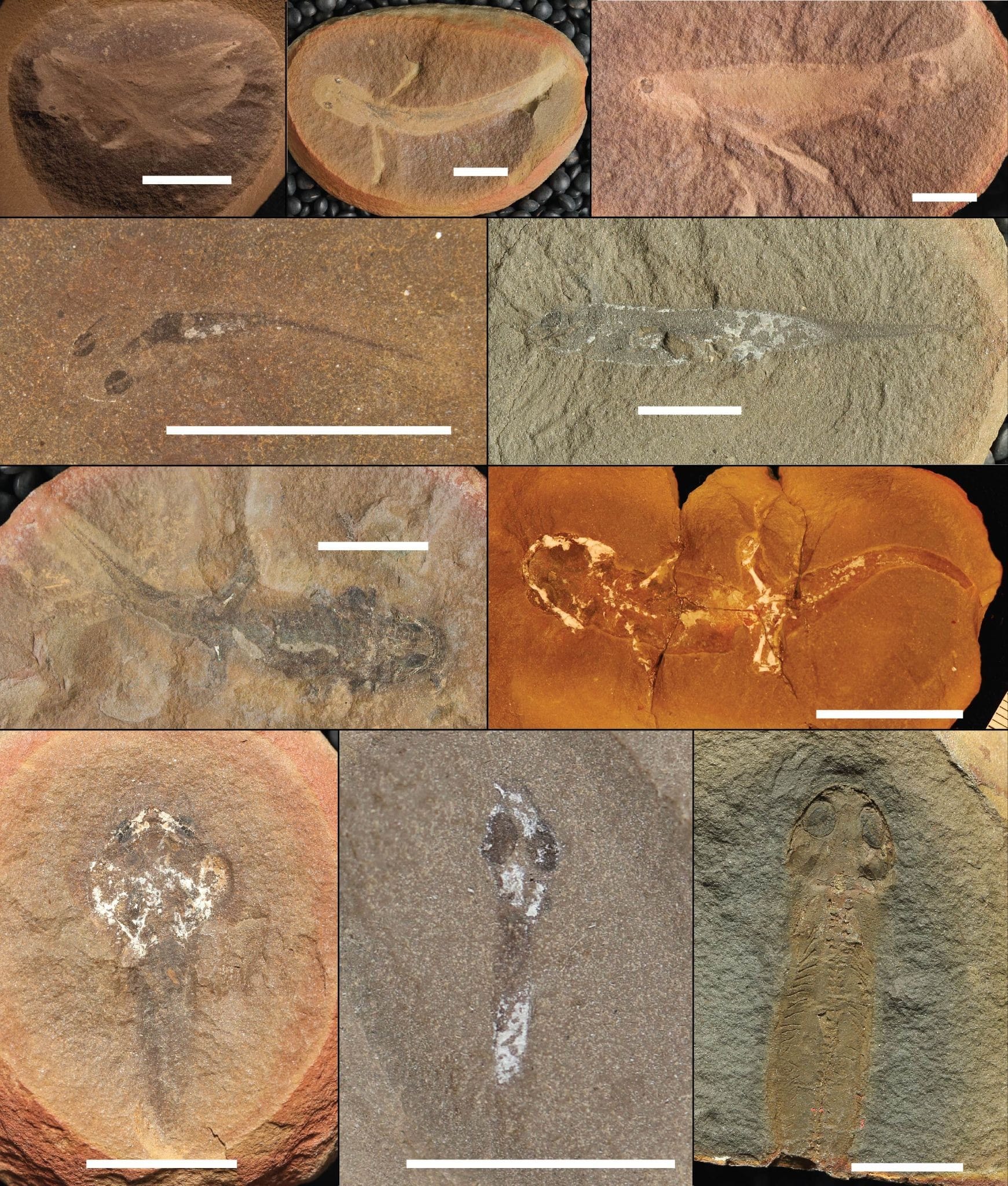
Such specimens are extremely rare because these baby animals were small and had developing bones that required ideal conditions for preservation. But Pardo and Mann were able to track down a handful of particularly intriguing fossils sourced from the Mazon Creek fossil beds in northern Illinois, which has preserved incredibly detailed snapshots of life as it existed about 310 million years ago, during the tail end of the fin-to-limb transition.
These animals included two embolomeres, which were crocodile-like predators, a snake-like aïstopod, and several megalichthyid fish. Some of the tetrapods were so young when they died that their fossils preserve abdominal yolk that the hatchlings were feeding off until they were mature enough to seek their own food.
This selection represents “the most phylogenetically extensive sample of stem tetrapod early developmental stages to date and a definitive documentation of stem tetrapod hatchling anatomy and life history,” according to the study.
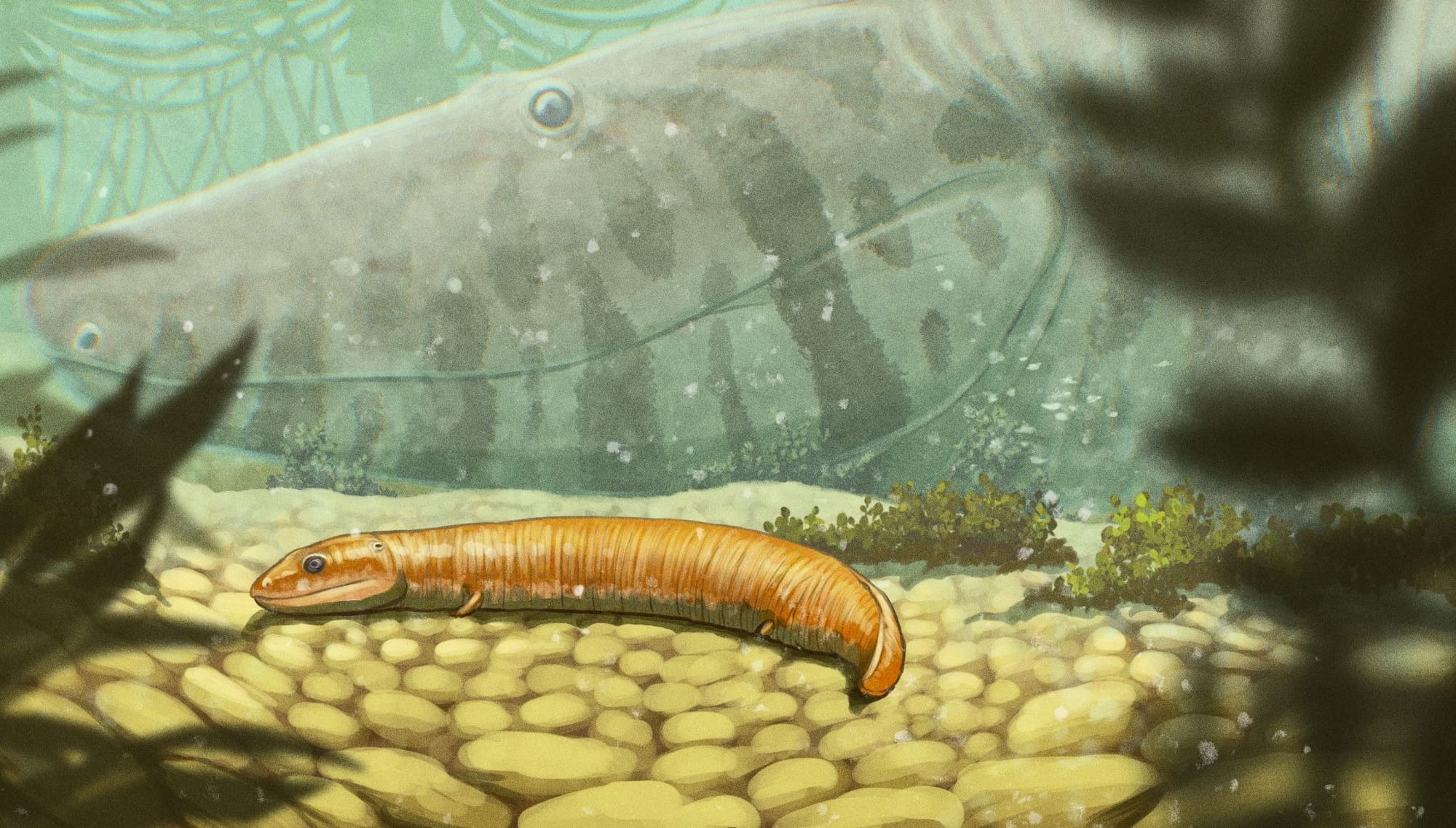
“We’ve been trying to look at the smallest animals that we can get out of these sites, where we can actually get very early stage babies,” Pardo said. “This is after the initial transition from water to land, but we have animals that span that transition. We have animals that branched off before [the development of] fingers and toes, and animals that branched off after fingers and toes.”
“When we started to look at these fossils, we were expecting that we were going to get something that looked kind of like a metamorphosis,” he added. “What we ended up finding is that there was no such evidence at all.”
External gills, for instance, are a telltale feature of the metamorphosis observed in frogs and toads. They appear on freshly hatched tadpoles and are slowly absorbed into the body to become lungs. But the hatchlings showed no signs of these gills, or anything else on the “checklist” of a transient larval phase, Pardo said.
“It was very striking that none of the structures that we would look at seemed like larval features that we would expect to see,” he said. “It was quite hard to make sense of at first because, at this point, there’s a 150-year tradition of treating these animals as amphibians.”
“What we ended up finding is that we can’t actually justify any claim of metamorphosis in those animals that are transitioning across that water-to-land transition,” he added.
The results suggest that early tetrapods had the same basic anatomy, more or less, throughout their life cycle. This evolutionary strategy may have delayed the transition to land for much longer than previously assumed, as tetrapods slowly acclimated to life in a terrestrial habitat. Amphibian-style metamorphosis probably emerged well after tetrapods established their foothold on land, perhaps to maximize their colonization of diverse new land environments, rather than as a condition for getting out of the seas in the first place.
In addition to overturning conventional wisdom, the fossils offer a glimpse of the ancient trailblazers that took the first steps into a new realm hundreds of millions of years ago, paving the way for the rest of us. As a result of them gradually expanding onto land, these tetrapods became the progenitors of all vertebrate land animals. The exquisite fossils even include eerily preserved eyes in some cases, gazing out from a long-lost past.
“They look like they were around yesterday,” Pardo said. “You can see skin. Sometimes the animals have color patterns preserved. You can see the lenses in their eyes. You can see these really intricate and intimate details of these animals. You can understand this was a living animal. It’s there.”
🌘
