

Close Menu

    Subscribe to Updates

    Get the latest creative news from FooBar about art, design and business.

    What's Hot

    SSA-921111 V1.1 (Last Update: 2026-05-13): Two File Parsing Vulnerabilities in Solid Edge Before Version SE226 Update 5

    May 13, 2026

    At Least We Know the Washington Post Isn’t Buying Views

    May 13, 2026

    aria2c Improper Certificate Validation – Research Advisory

    May 13, 2026
    Facebook X (Twitter) Instagram
    • Demos
    • Technology
    • Gaming
    • Buy Now
    Facebook X (Twitter) Instagram Pinterest Vimeo
    Canadian Cyber WatchCanadian Cyber Watch
    • Home
    • News
    • Alerts
    • Tips
    • Tools
    • Industry
    • Incidents
    • Events
    • Education
    Subscribe
    Canadian Cyber WatchCanadian Cyber Watch
    Home»News»MuddyWater hackers use Chaos ransomware as a decoy in attacks
    News

    MuddyWater hackers use Chaos ransomware as a decoy in attacks

    adminBy adminMay 7, 2026No Comments3 Mins Read
    Share Facebook Twitter Pinterest LinkedIn Tumblr Reddit Telegram Email
    Share
    Facebook Twitter LinkedIn Pinterest Email


    MuddyWater hackers use Chaos ransomware as a decoy in attacks

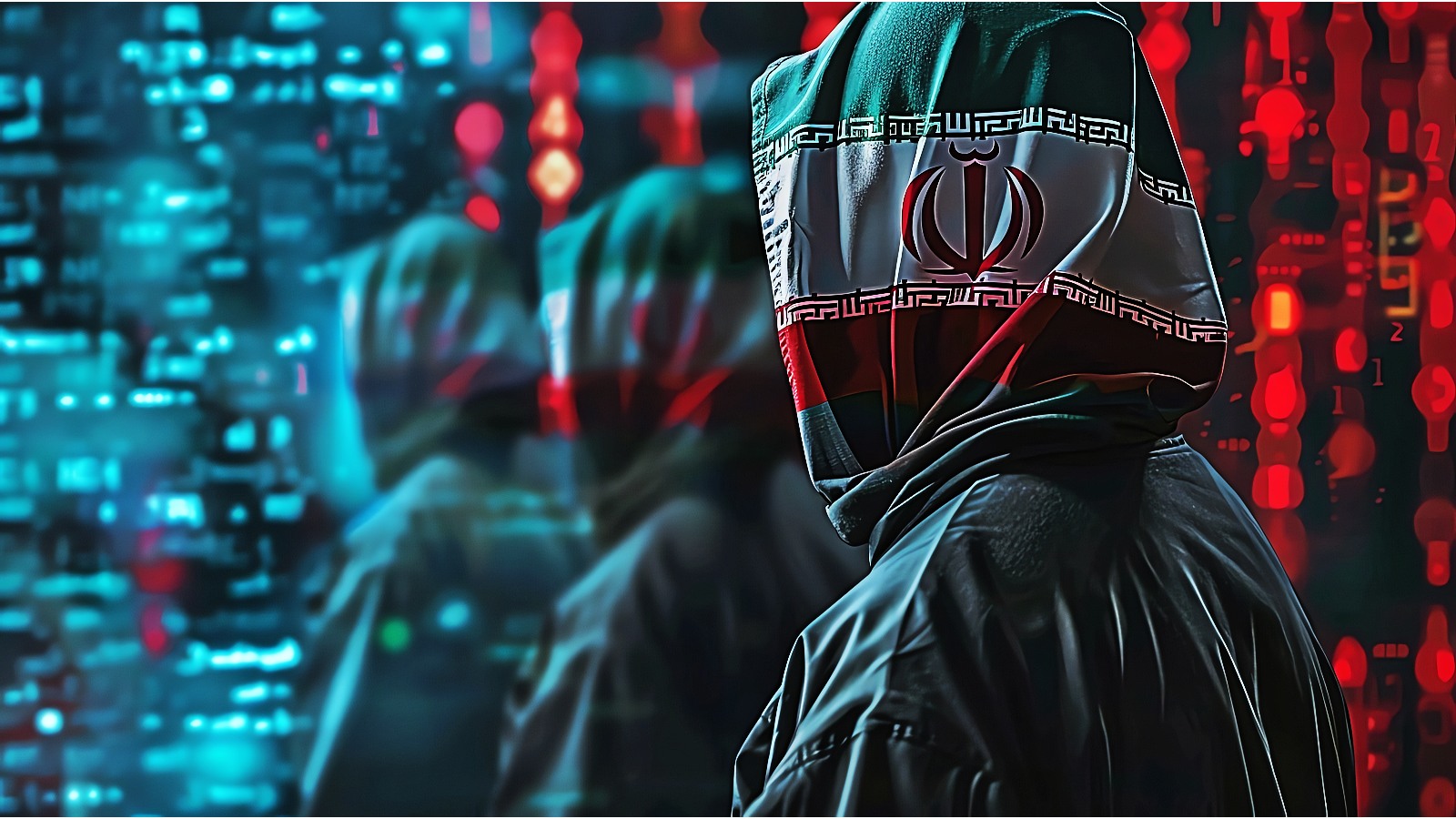
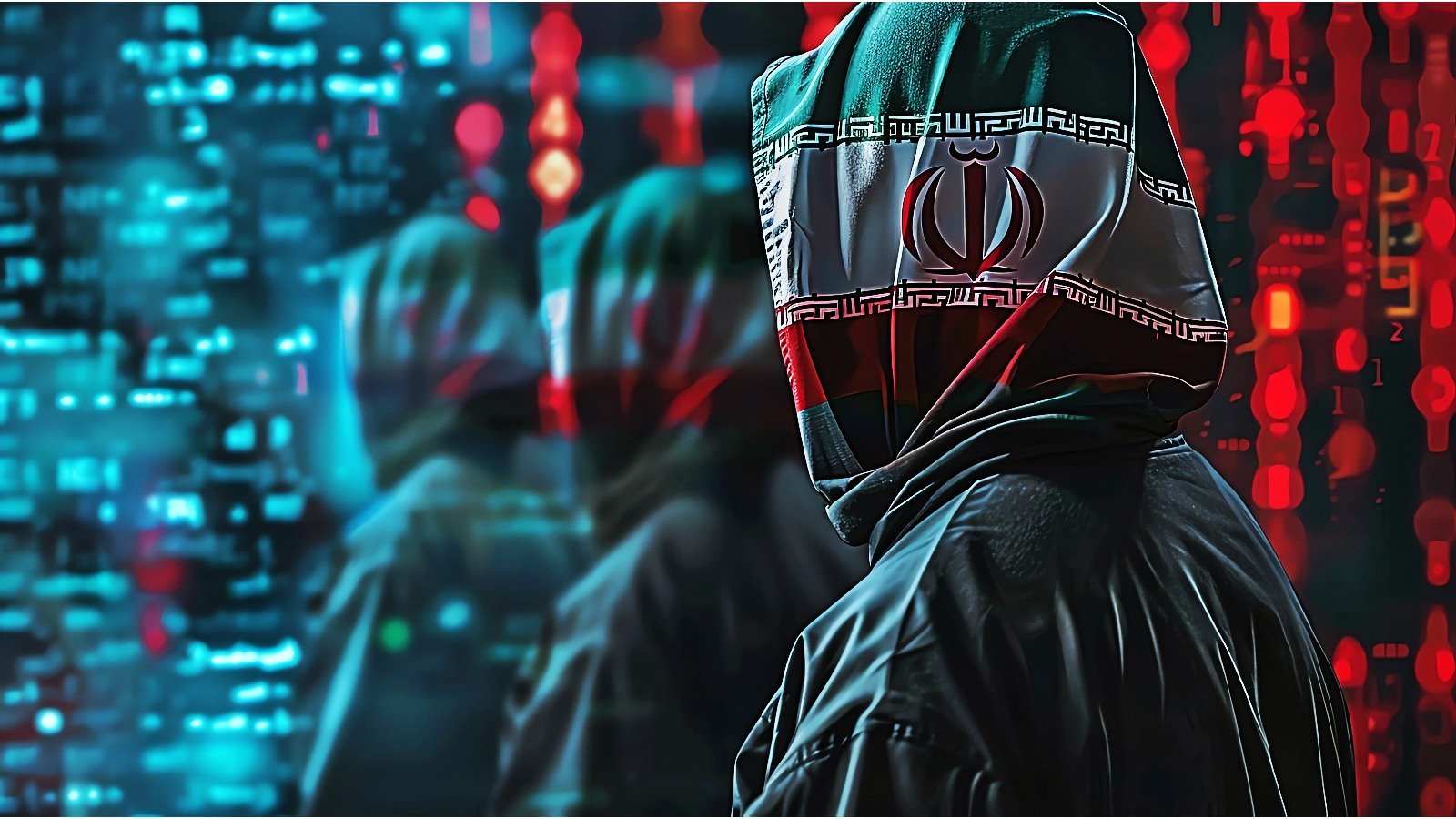
    The MuddyWater Iranian hackers disguised their operations as a Chaos ransomware attack, relying on  Microsoft Teams social engineering to gain access and establish persistence.

    Although the attack involved credential theft, persistence, remote access, data exfiltration, extortion emails, and an entry on the Chaos leak portal, the attackers used infrastructure and techniques associated with the MuddyWater attacks.

    Rapid7 researchers believe that the ransomware component was likely used to conceal the actual cyber-espionage operation and to complicate attribution.

    “The strategy highlights the convergence between state-sponsored intrusion activity and criminal tradecraft, where a big “tell” lies in the techniques that were deployed – and those that weren’t. This strategy suggests the primary goal was not financial gain,” explains Rapid7.

    Despite the facade, Rapid7 has moderate confidence in attributing the incident to MuddyWater, a threat group also known as Static Kitten, Mango Sandstorm, and Seedworm.

    The conclusion is based on infrastructure overlap, a specific code-signing certificate that the state-sponsored group used to sign Stagecomp and Darkcomp malware attributed to the threat actor, and various operational tradecraft.

    MuddyWater is an Iranian state-sponsored cyber-espionage group, notorious for long-term network intrusion campaigns that align with the country’s Ministry of Intelligence and Security (MOIS).

    The Chaos is a ransomware-as-a-service (RaaS) operation that emerged in 2025 and is known for big-game hunting attacks, double-extortion tactics, and social engineering campaigns mostly targeting organizations in the United States.

    Attack progression

    The intrusion Rapid7 examined started through Microsoft Teams social engineering, where the attackers initiated chats with employees, established screen-sharing sessions, harvested credentials, manipulated multi-factor authentication (MFA) settings, and, in some cases, deployed AnyDesk for remote access.

    Credential theft occurred either via phishing pages masquerading as Microsoft Quick Assist or by tricking victims into typing their passwords into local text files.

    After compromising accounts, the attackers authenticated to internal systems, including a domain controller, and established persistence using RDP, DWAgent, and AnyDesk.

    Next, they leveraged a malware loader (ms_upd.exe) to drop a custom backdoor (Game.exe), disguised as a Microsoft WebView2 application.

    The malware features anti-analysis and anti-VM checks, and supports 12 commands, including PowerShell and CMD command execution, file upload and deletion, and persistent shell access.
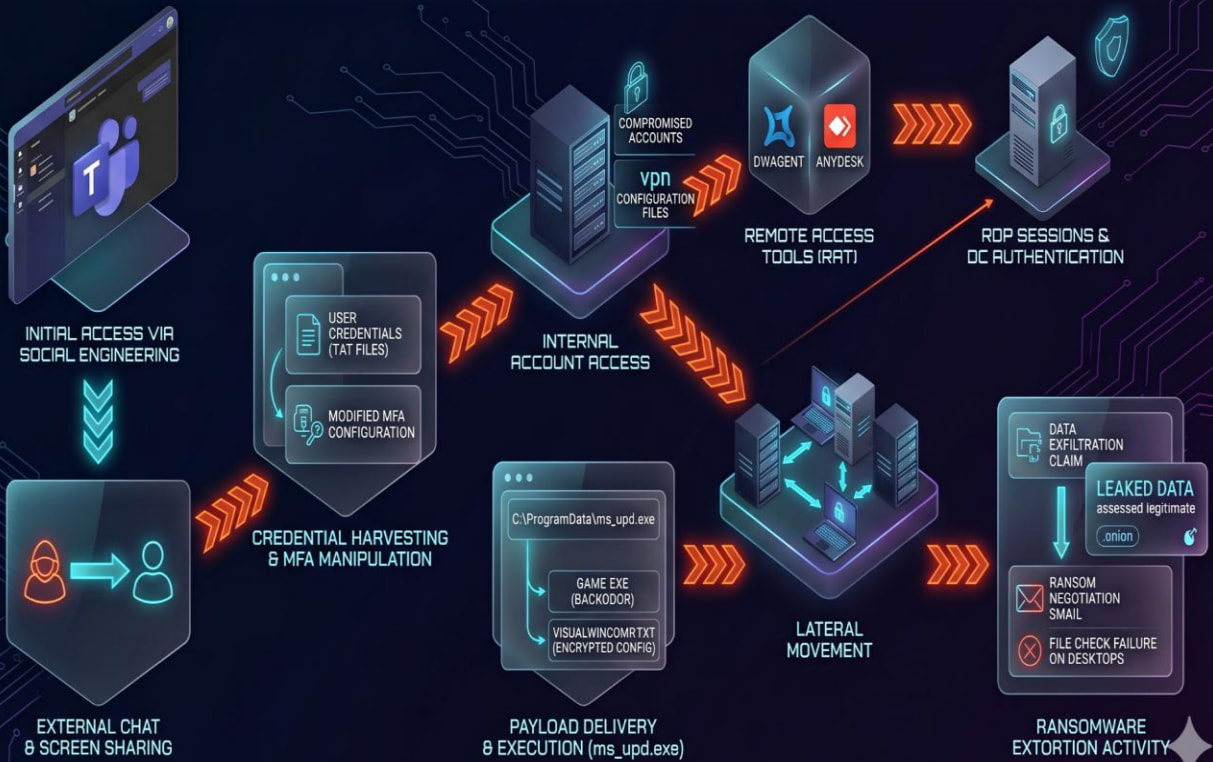
    Overview of the attack
    Overview of the attack
    Source: Rapid7

    Rapid7 notes that MuddyWater has used ransomware in the past to mask its cyber-espionage operations. In late 2025, the threat actor deployed Qilin ransomware in an attack against an Israeli organization.

    The researchers suggest that the threat group might have pivoted to a different ransomware branding following the attribution of that late 2025 to MOIS operatives.


    article image

    AI chained four zero-days into one exploit that bypassed both renderer and OS sandboxes. A wave of new exploits is coming.

    At the Autonomous Validation Summit (May 12 & 14), see how autonomous, context-rich validation finds what’s exploitable, proves controls hold, and closes the remediation loop.

    Claim Your Spot


    Source link

    Share. Facebook Twitter Pinterest LinkedIn Tumblr Email
    Previous ArticleGoogle Chrome security advisory (AV26-426)
    Next Article CVE-2026-4430 | THREATINT
    admin
    • Website

    Related Posts

    News

    At Least We Know the Washington Post Isn’t Buying Views

    May 13, 2026
    News

    Windows BitLocker zero-day gives access to protected drives, PoC released

    May 13, 2026
    News

    War and Data Centers Are Driving Up the Cost of Fiber-Optic Cable

    May 13, 2026
    Add A Comment

    Comments are closed.

    Demo
    Top Posts

    Catchy & Intriguing

    March 17, 202674 Views

    Defending Canada’s Digital Frontier: Combating Phishing, Social Engineering, Ransomware, and Malware

    March 23, 202624 Views

    IP Address Investigations and Local OSINT

    March 20, 202624 Views
    Stay In Touch
    • Facebook
    • YouTube
    • TikTok
    • WhatsApp
    • Twitter
    • Instagram
    Latest Reviews
    85
    Featured

    Pico 4 Review: Should You Actually Buy One Instead Of Quest 2?

    January 15, 2021 Featured
    8.1
    Uncategorized

    A Review of the Venus Optics Argus 18mm f/0.95 MFT APO Lens

    January 15, 2021 Uncategorized
    8.9
    Editor's Picks

    DJI Avata Review: Immersive FPV Flying For Drone Enthusiasts

    January 15, 2021 Editor's Picks

    Subscribe to Updates

    Get the latest tech news from FooBar about tech, design and biz.

    Demo
    Most Popular

    Catchy & Intriguing

    March 17, 202674 Views

    Defending Canada’s Digital Frontier: Combating Phishing, Social Engineering, Ransomware, and Malware

    March 23, 202624 Views

    IP Address Investigations and Local OSINT

    March 20, 202624 Views
    Our Picks

    SSA-921111 V1.1 (Last Update: 2026-05-13): Two File Parsing Vulnerabilities in Solid Edge Before Version SE226 Update 5

    May 13, 2026

    At Least We Know the Washington Post Isn’t Buying Views

    May 13, 2026

    aria2c Improper Certificate Validation – Research Advisory

    May 13, 2026

    Subscribe to Updates

    Get the latest creative news from FooBar about art, design and business.

    Facebook X (Twitter) Instagram Pinterest
    • Home
    • Technology
    • Gaming
    • Phones
    • Buy Now
    © 2026 ThemeSphere. Designed by ThemeSphere.

    Type above and press Enter to search. Press Esc to cancel.