



Close Menu

    Subscribe to Updates

    Get the latest creative news from FooBar about art, design and business.

    What's Hot

    ZDI-26-162: GStreamer H.266 Codec Parser Stack-based Buffer Overflow Remote Code Execution Vulnerability

    May 3, 2026

    Telegram Mini Apps abused for crypto scams, Android malware delivery

    May 3, 2026

    ZDI-26-163: GStreamer JPEG Parser Heap-based Buffer Overflow Remote Code Execution Vulnerability

    May 3, 2026
    Facebook X (Twitter) Instagram
    • Demos
    • Technology
    • Gaming
    • Buy Now
    Facebook X (Twitter) Instagram Pinterest Vimeo
    Canadian Cyber WatchCanadian Cyber Watch
    • Home
    • News
    • Alerts
    • Tips
    • Tools
    • Industry
    • Incidents
    • Events
    • Education
    Subscribe
    Canadian Cyber WatchCanadian Cyber Watch
    Home»News»Telegram Mini Apps abused for crypto scams, Android malware delivery
    News

    Telegram Mini Apps abused for crypto scams, Android malware delivery

    adminBy adminMay 3, 2026No Comments3 Mins Read
    Share Facebook Twitter Pinterest LinkedIn Tumblr Reddit Telegram Email
    Share
    Facebook Twitter LinkedIn Pinterest Email


    Telegram

    Cybersecurity researchers have uncovered a large-scale fraud operation that uses Telegram’s Mini App feature to run crypto scams, impersonate well-known brands, and distribute Android malware.

    A new report by CTM360 says the platform, dubbed FEMITBOT, is based on a string found in API responses and uses Telegram bots and embedded Mini Apps to create convincing, app-like experiences directly within the messaging platform.

    Telegram Mini Apps are lightweight web applications that run inside Telegram’s built-in browser, enabling services such as payments, account access, and interactive tools without requiring users to leave the app.

    Abusing Telegram mini apps

    According to a CTM360 report shared with BleepingComputer, the FEMITBOT platform is used to conduct multiple types of scams, including fake cryptocurrency platforms, financial services, AI tools, and streaming sites.

    In various campaigns, threat actors impersonated widely recognized brands to increase credibility and engagement, while using the same backend infrastructure with different domains and Telegram bots.

    Some of the brands impersonated in this campaign include Apple, Coca-Cola, Disney, eBay, IBM, Moon Pay, NVIDIA, YouKu,
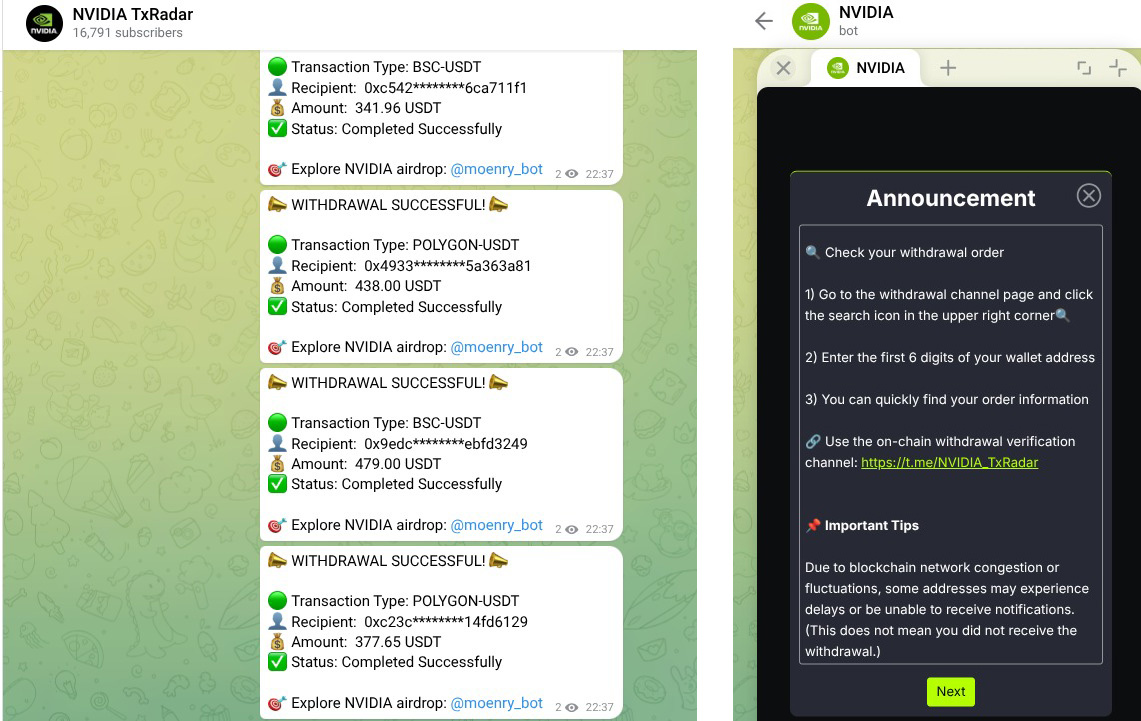
    Telegram Mini App impersonating NVIDIA
    Telegram Mini App impersonating NVIDIA
    Source: CTM360

    Researchers say the activity uses a shared backend, where multiple phishing domains use the same API response, “Welcome to join the FEMITBOT platform,” indicating they are all using the same infrastructure.

    API response found in FEMITBOT campaigns
    API response found in FEMITBOT campaigns
    Source: CTM360

    The operation uses Telegram bots to display phishing sites directly within the social media platform. When a user interacts with a bot and clicks “Start,” the bot launches a Mini App that displays a phishing page in Telegram’s built-in WebView, making it appear as part of the app itself.

    Once inside, victims are shown dashboards with fake balances or “earnings,” often paired with countdown timers or limited-time offers to create a sense of urgency.

    When users attempt to withdraw funds, they are prompted to make a deposit or complete referral tasks, a common tactic in investment and advance-fee scams.

    The researchers say the infrastructure is designed to be used across different campaigns, allowing attackers to easily switch branding, languages, and themes.

    The campaigns also use tracking scripts, such as Meta and TikTok tracking pixels, to track users’ activity, measure conversions, and likely to optimize performance.

    Some Mini Apps also attempted to distribute malware in the form of Android APKs that impersonated brands like the BBC, NVIDIA, CineTV, Coreweave, and Claro.
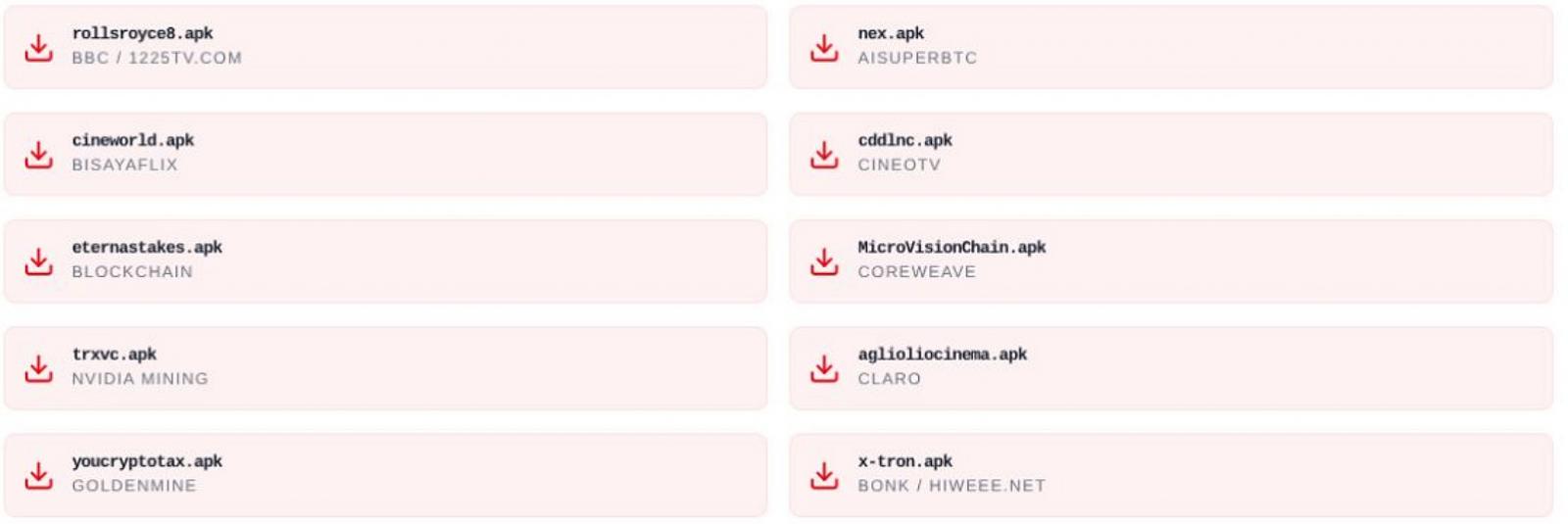
    Some of the Android APKs pushed by FEMITBOT
    Some of the Android APKs pushed by FEMITBOT
    Source: CTM360

    Users are prompted to download Android APK files, open links within the in-app browser, or install progressive web apps that mimic legitimate software.

    “The APK filenames are carefully chosen to resemble legitimate applications or use random-looking names that don’t immediately trigger suspicion,” explains CTM360.

    “The APKs are hosted on the same domain as the API, ensuring TLS certificate validity and avoiding mixed-content warnings in the browser.”

    Users should be cautious when interacting with Telegram bots that promote crypto investments or prompt them to launch Mini Apps, especially if they are asked to deposit funds or download apps.

    As a general rule, Android users should avoid sideloading APK files, which are commonly used to distribute malware outside the Google Play Store.


    article image

    AI chained four zero-days into one exploit that bypassed both renderer and OS sandboxes. A wave of new exploits is coming.

    At the Autonomous Validation Summit (May 12 & 14), see how autonomous, context-rich validation finds what’s exploitable, proves controls hold, and closes the remediation loop.

    Claim Your Spot


    Source link

    Share. Facebook Twitter Pinterest LinkedIn Tumblr Email
    Previous ArticleZDI-26-163: GStreamer JPEG Parser Heap-based Buffer Overflow Remote Code Execution Vulnerability
    Next Article ZDI-26-162: GStreamer H.266 Codec Parser Stack-based Buffer Overflow Remote Code Execution Vulnerability
    admin
    • Website

    Related Posts

    News

    State of Exploitation – A Peek into the Last Decade of Vulnerability Exploitation | Blog

    May 3, 2026
    News

    Expanding Access to CVE Data – CVE Program’s CVE List added to VulnCheck Community | Blog

    May 3, 2026
    News

    Critrical cPanel flaw mass-exploited in “Sorry” ransomware attacks

    May 3, 2026
    Add A Comment

    Comments are closed.

    Demo
    Top Posts

    Catchy & Intriguing

    March 17, 202671 Views

    The Grandparent Scam: How AI Voice Technology Makes This Old Con Deadlier Than Ever

    March 18, 202620 Views

    Global Takedown of Massive IoT Botnets Halts Record-Breaking Cyberattacks

    March 20, 202619 Views
    Stay In Touch
    • Facebook
    • YouTube
    • TikTok
    • WhatsApp
    • Twitter
    • Instagram
    Latest Reviews
    85
    Featured

    Pico 4 Review: Should You Actually Buy One Instead Of Quest 2?

    January 15, 2021 Featured
    8.1
    Uncategorized

    A Review of the Venus Optics Argus 18mm f/0.95 MFT APO Lens

    January 15, 2021 Uncategorized
    8.9
    Editor's Picks

    DJI Avata Review: Immersive FPV Flying For Drone Enthusiasts

    January 15, 2021 Editor's Picks

    Subscribe to Updates

    Get the latest tech news from FooBar about tech, design and biz.

    Demo
    Most Popular

    Catchy & Intriguing

    March 17, 202671 Views

    The Grandparent Scam: How AI Voice Technology Makes This Old Con Deadlier Than Ever

    March 18, 202620 Views

    Global Takedown of Massive IoT Botnets Halts Record-Breaking Cyberattacks

    March 20, 202619 Views
    Our Picks

    ZDI-26-162: GStreamer H.266 Codec Parser Stack-based Buffer Overflow Remote Code Execution Vulnerability

    May 3, 2026

    Telegram Mini Apps abused for crypto scams, Android malware delivery

    May 3, 2026

    ZDI-26-163: GStreamer JPEG Parser Heap-based Buffer Overflow Remote Code Execution Vulnerability

    May 3, 2026

    Subscribe to Updates

    Get the latest creative news from FooBar about art, design and business.

    Facebook X (Twitter) Instagram Pinterest
    • Home
    • Technology
    • Gaming
    • Phones
    • Buy Now
    © 2026 ThemeSphere. Designed by ThemeSphere.

    Type above and press Enter to search. Press Esc to cancel.