



Close Menu

    Subscribe to Updates

    Get the latest creative news from FooBar about art, design and business.

    What's Hot

    SSA-734261 V1.0: Authentication Bypass Vulnerability in Energy Services Using Elspec G5DFR

    April 8, 2026

    Incident: Eagers Automotive says IT outage stems from cyber incident | iTnews

    April 8, 2026

    Accelerating Our Footprint and Innovation: Why VulnCheck Posted a Record-Setting Q3 | Blog

    April 8, 2026
    Facebook X (Twitter) Instagram
    • Demos
    • Technology
    • Gaming
    • Buy Now
    Facebook X (Twitter) Instagram Pinterest Vimeo
    Canadian Cyber WatchCanadian Cyber Watch
    • Home
    • News
    • Alerts
    • Tips
    • Tools
    • Industry
    • Incidents
    • Events
    • Education
    Subscribe
    Canadian Cyber WatchCanadian Cyber Watch
    Home»News»New RoadK1ll WebSocket implant used to pivot on breached networks
    News

    New RoadK1ll WebSocket implant used to pivot on breached networks

    adminBy adminMarch 30, 2026No Comments3 Mins Read
    Share Facebook Twitter Pinterest LinkedIn Tumblr Reddit Telegram Email
    Share
    Facebook Twitter LinkedIn Pinterest Email


    New RoadK1ll WebSocket implant used to pivot on breached networks

    A newly identified malicious implant named RoadK1ll is enabling threat actors to quietly move from a compromised host to other systems on the network.

    The malware is a Node.js implant that communicates over a custom WebSocket protocol to sustain ongoing attacker access and enable further operations.

    RoadK1ll was discovered by managed detection and response (MDR) provider Blackpoint during an incident response engagement.

    The researchers describe it as a lightweight reverse tunneling implant that blends into normal network activity and turns an infected machine into a relay point for the attacker.

    “Its sole function is to convert a single compromised machine into a controllable relay point, an access amplifier, through which an operator can pivot to internal systems, services, and network segments that would otherwise be unreachable from outside the perimeter,” Blackpoint says.

    RoadK1ll does not rely on an inbound listener on the compromised host. It establishes an outbound WebSocket connection to attacker-controlled infrastructure, which is then used as a tunnel to relay TCP traffic on demand.

    This approach allows the attacker to remain undetected for a longer period and forward traffic to internal systems through a single WebSocket tunnel.

    “The attacker can instruct RoadK1ll to open connections to internal services, management interfaces, or other hosts that are not directly exposed externally,” Blackpoint says.

    “Because these connections originate from the compromised machine, they inherit its network trust and positioning, effectively bypassing perimeter controls.”

    Furthermore, RoadK1ll supports multiple concurrent connections over the same tunnel, allowing its operator to communicate with several destinations at once.

    According to the researchers, the malware supports a small set of commands, which include:

    • CONNECT – Instructs the implant to open a TCP connection to a specified host and port
    • DATA – Forwards raw traffic through an active connection
    • CONNECTED – Confirms that a requested connection was successfully established
    • CLOSE – Terminates an active connection
    • ERROR – Returns failure information to the operator

    The CONNECT command triggers RoadK1ll’s primary function: initiating an outbound TCP connection to an adjacent target, extending the attacker’s reach into the compromised network.
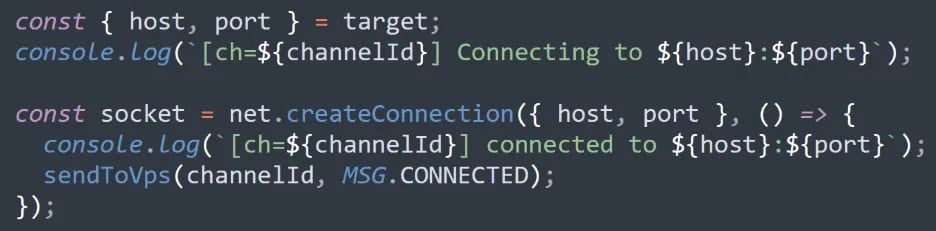
    Pivoting to accessible systems
    Pivoting to accessible systems
    Source: Blackpoint

    If the channel is interrupted, the tool attempts to restore the WebSocket tunnel using a re-connection mechanism, allowing the attackers to maintain persistent access without generating noise through manual intervention.
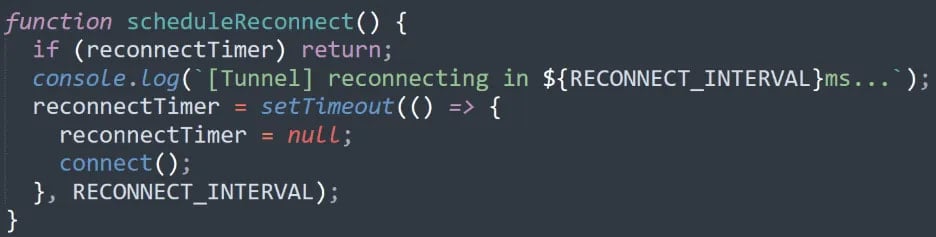
    Reconnection mechanism
    Reconnection mechanism
    Source: Blackpoint

    However, Blackpoint notes that RoadK1ll lacks a traditional persistence mechanism that uses registry keys, scheduled tasks, or services. Instead, it operates only as long as its process remains alive.

    Despite this, the researchers say that the malware “shows a more modern and purpose-built implementation” of covert communication that makes it flexible, efficient, and easy to deploy.

    It also allows the threat actor to move to internal systems and segments of the environment that are not reachable from outside the network.

    Blackpoint provides a small set of host-based indicators of compromise that includes a hash for RoadK1ll and an IP address used by the threat actor for communication with the implant.


    tines

    Automated pentesting proves the path exists. BAS proves whether your controls stop it. Most teams run one without the other.

    This whitepaper maps six validation surfaces, shows where coverage ends, and provides practitioners with three diagnostic questions for any tool evaluation.


    Source link

    Share. Facebook Twitter Pinterest LinkedIn Tumblr Email
    Previous ArticleSSA-265688 V2.1 (Last Update: 2026-02-10): Vulnerabilities in the additional GNU/Linux subsystem of the SIMATIC S7-1500 TM MFP V1.1
    Next Article Citrix security advisory (AV26-267) – Update 1
    admin
    • Website

    Related Posts

    News

    Accelerating Our Footprint and Innovation: Why VulnCheck Posted a Record-Setting Q3 | Blog

    April 8, 2026
    News

    Is a $30,000 GPU Good at Password Cracking?

    April 8, 2026
    News

    InfoSec News Nuggets 04/08/2026

    April 8, 2026
    Add A Comment

    Comments are closed.

    Demo
    Top Posts

    Global Takedown of Massive IoT Botnets Halts Record-Breaking Cyberattacks

    March 20, 202619 Views

    Catchy & Intriguing

    March 17, 202619 Views

    The Grandparent Scam: How AI Voice Technology Makes This Old Con Deadlier Than Ever

    March 18, 202617 Views
    Stay In Touch
    • Facebook
    • YouTube
    • TikTok
    • WhatsApp
    • Twitter
    • Instagram
    Latest Reviews
    85
    Featured

    Pico 4 Review: Should You Actually Buy One Instead Of Quest 2?

    January 15, 2021 Featured
    8.1
    Uncategorized

    A Review of the Venus Optics Argus 18mm f/0.95 MFT APO Lens

    January 15, 2021 Uncategorized
    8.9
    Editor's Picks

    DJI Avata Review: Immersive FPV Flying For Drone Enthusiasts

    January 15, 2021 Editor's Picks

    Subscribe to Updates

    Get the latest tech news from FooBar about tech, design and biz.

    Demo
    Most Popular

    Global Takedown of Massive IoT Botnets Halts Record-Breaking Cyberattacks

    March 20, 202619 Views

    Catchy & Intriguing

    March 17, 202619 Views

    The Grandparent Scam: How AI Voice Technology Makes This Old Con Deadlier Than Ever

    March 18, 202617 Views
    Our Picks

    SSA-734261 V1.0: Authentication Bypass Vulnerability in Energy Services Using Elspec G5DFR

    April 8, 2026

    Incident: Eagers Automotive says IT outage stems from cyber incident | iTnews

    April 8, 2026

    Accelerating Our Footprint and Innovation: Why VulnCheck Posted a Record-Setting Q3 | Blog

    April 8, 2026

    Subscribe to Updates

    Get the latest creative news from FooBar about art, design and business.

    Facebook X (Twitter) Instagram Pinterest
    • Home
    • Technology
    • Gaming
    • Phones
    • Buy Now
    © 2026 ThemeSphere. Designed by ThemeSphere.

    Type above and press Enter to search. Press Esc to cancel.