


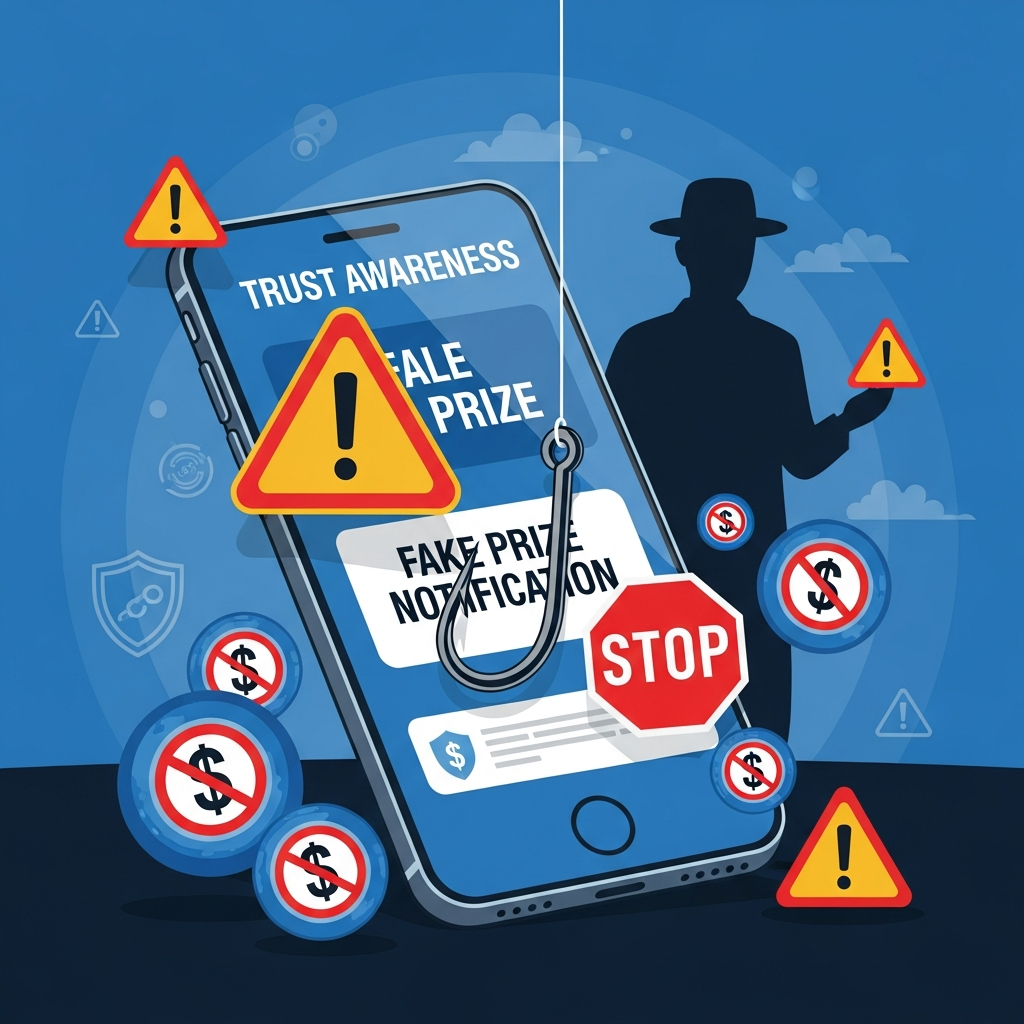
The Call That Almost Changed Everything
Margaret from Winnipeg was folding laundry when her phone rang on a Tuesday afternoon. The caller ID showed a local number, and the voice on the other end was professional, warm, and incredibly exciting.
"Congratulations, Margaret! This is David Williams from Publishers Clearinghouse. You've won our grand prize – $2.5 million and a brand new Mercedes-Benz!" The man's enthusiasm was infectious. "We've been trying to reach you for weeks!"
Margaret's heart raced. She remembered entering online sweepstakes months ago. Could this really be happening?
"Now, to process your winnings, we need to verify your identity and handle the tax paperwork," David continued smoothly. "There's a small processing fee of $500 that needs to be paid today to release your prize. Can you help us with that?"
Something felt off. Margaret asked to call back, but David's tone shifted: "Ma'am, I'm afraid this offer expires in two hours. If we don't process this today, your winnings will go to the alternate winner."
Fortunately, Margaret hung up and called her daughter, who confirmed her suspicions. Margaret had nearly become the latest victim of a Publishers Clearinghouse prize scam – one of the most persistent and profitable frauds targeting North Americans today.
What This Scam Is
Publishers Clearinghouse prize scams are fraudulent schemes where criminals impersonate legitimate sweepstakes companies to trick victims into paying upfront fees for prizes they'll never receive. Scammers exploit the popularity of real contests like Publishers Clearinghouse's famous prize patrol, using the company's trusted name to steal money and personal information.
These scams have nothing to do with the actual Publishers Clearinghouse company, which has been fighting these imposters for decades. The real company never asks winners to pay fees, taxes, or processing charges upfront.
How the Scam Typically Works
1. The Bait
Scammers contact victims through phone calls, emails, text messages, or even postal mail, claiming they've won a substantial prize from Publishers Clearinghouse or similar sweepstakes. They often use spoofed phone numbers that appear local or legitimate, and may reference real PCH promotions to seem authentic. Some victims receive official-looking certificates or checks in the mail.
2. The Hook
The "prize coordinator" provides convincing details: specific prize amounts (often $1-5 million), luxury vehicles, and official-sounding confirmation numbers. They may know personal information about the victim obtained from data breaches or social media, making the call seem legitimate. Some scammers even send partial prize money or fake checks to build trust.
3. The Pressure
Here's where the scam accelerates. The caller explains that taxes, processing fees, insurance, or customs charges must be paid immediately to release the winnings. They create artificial urgency: "The prize expires today," "We're calling the alternate winner in one hour," or "This is your final notification." They often request payment through untraceable methods like wire transfers, gift cards, cryptocurrency, or money orders.
4. The Payoff (For the Scammer)
Once victims send money, scammers either disappear entirely or return with additional "unexpected" fees. Some maintain the fraud for months, continuously requesting more payments for various fabricated charges. The promised prizes never materialize, and victims lose their money with little chance of recovery.
Red Flags to Watch For
• Upfront payment requests – Legitimate prizes never require fees, taxes, or processing charges
• Pressure tactics – Claims that prizes "expire" or will go to someone else
• Untraceable payment methods – Requests for wire transfers, gift cards, or cryptocurrency
• Unsolicited contact – You didn't enter any contest they're referencing
• Too-good-to-be-true amounts – Prizes worth millions from contests you don't remember entering
• Personal information requests – Asking for banking details, Social Insurance Numbers, or passwords
• Poor communication quality – Grammatical errors, generic email addresses, or unprofessional presentation
• Fake documentation – Official-looking but poorly designed certificates or checks
How to Protect Yourself
Verify independently. If someone claims you've won a prize, hang up and contact the real company directly using official contact information from their website. Publishers Clearinghouse has a dedicated fraud hotline and clear information about how real winners are contacted.
Never pay to claim prizes. Legitimate sweepstakes handle all taxes and fees internally. If someone asks for money upfront, it's a scam, period.
Protect your information. Don't provide personal details like banking information, Social Insurance Numbers, or passwords to unsolicited callers. Scammers use this information for identity theft.
Use call screening. Let unknown numbers go to voicemail. Legitimate prize notifications can wait, while scammers rely on immediate contact to build excitement and urgency.
Enable two-factor authentication on all important accounts. If scammers do obtain some personal information, MFA prevents them from accessing your financial accounts.
Stay informed about current scam trends. Follow the Canadian Anti-Fraud Centre's updates and share information with vulnerable family members, especially elderly relatives who are frequently targeted.
Real Examples
Phone Call Script:
"Hello, is this Sarah? Congratulations! This is Michael from Publishers Clearinghouse Prize Patrol. You've won 1.8 million and a new BMW! Your confirmation number is PCH-7749. To process your winnings today, we need you to cover the 299 insurance fee. Can you purchase iTunes gift cards for this amount?"
Red flags: Immediate payment request, gift card payment method, artificial urgency.
Text Message:
"FINAL NOTICE: You've won $500,000 from Publishers Clearinghouse! Claim expires TODAY. Call 1-800-XXX-XXXX with reference #PCH2024. Don't delay!"
Red flags: Expiration pressure, unsolicited contact, generic reference number.
Email:
"Dear Winner, Your $2M prize is ready for delivery! Small processing fee required. Click here to pay securely: [suspicious link]"
Red flags: Generic greeting, payment requirement, suspicious links.
Why This Scam Is Increasing
Publishers Clearinghouse scams are surging due to several converging factors. The COVID-19 pandemic created economic anxiety, making people more susceptible to "financial relief" offers. Simultaneously, scammers gained access to more personal information through numerous data breaches, allowing them to craft more convincing approaches.
Technology has made these scams easier and cheaper to execute. Spoofed caller ID makes scam calls appear local and trustworthy. AI-powered tools help create more professional-looking fake documents and websites. Voice-over-IP services allow scammers to operate internationally while appearing to call from legitimate locations.
The Canadian Anti-Fraud Centre reports that prize scams peak during economic uncertainty and around holidays when people are more hopeful about financial windfalls. Social media also provides scammers with detailed personal information to make their approaches more convincing.
Expert Insight
Cybersecurity experts emphasize that these scams succeed because they exploit fundamental psychological triggers. The combination of excitement (winning money), fear (losing the opportunity), and social proof (official-sounding documentation) creates a perfect storm for manipulation.
The most effective defense is understanding that legitimate companies have no financial incentive to make prize claiming difficult or expensive. Real sweepstakes want to publicize their winners for marketing purposes – they don't hide behind urgent deadlines and payment requirements.
What to Do If You’re Targeted or Victimized
If you receive a suspicious prize notification:
- Don’t provide any information or money
- Hang up or delete the message immediately
- Report the attempt to the Canadian Anti-Fraud Centre (1-888-495-8501)
- Warn family and friends about the specific approach used
If you've already sent money:
- Contact your bank or payment provider immediately
- File a police report with all documentation
- Report to the Canadian Anti-Fraud Centre and your provincial consumer protection office
- Monitor your credit reports for signs of identity theft
- Don’t send additional money, even if scammers promise to “fix” the situation
If you provided personal information:
- Change passwords on all important accounts
- Monitor bank and credit card statements closely
- Consider placing a fraud alert on your credit file
- Be alert for follow-up scams targeting previous victims
Final Takeaway
Remember: Real prizes don't come with price tags, and legitimate companies don't operate under artificial deadlines. When someone offers you millions but asks for hundreds first, the only guarantee is that you'll lose your money. Trust your instincts – if it feels too good to be true, it absolutely is.
