


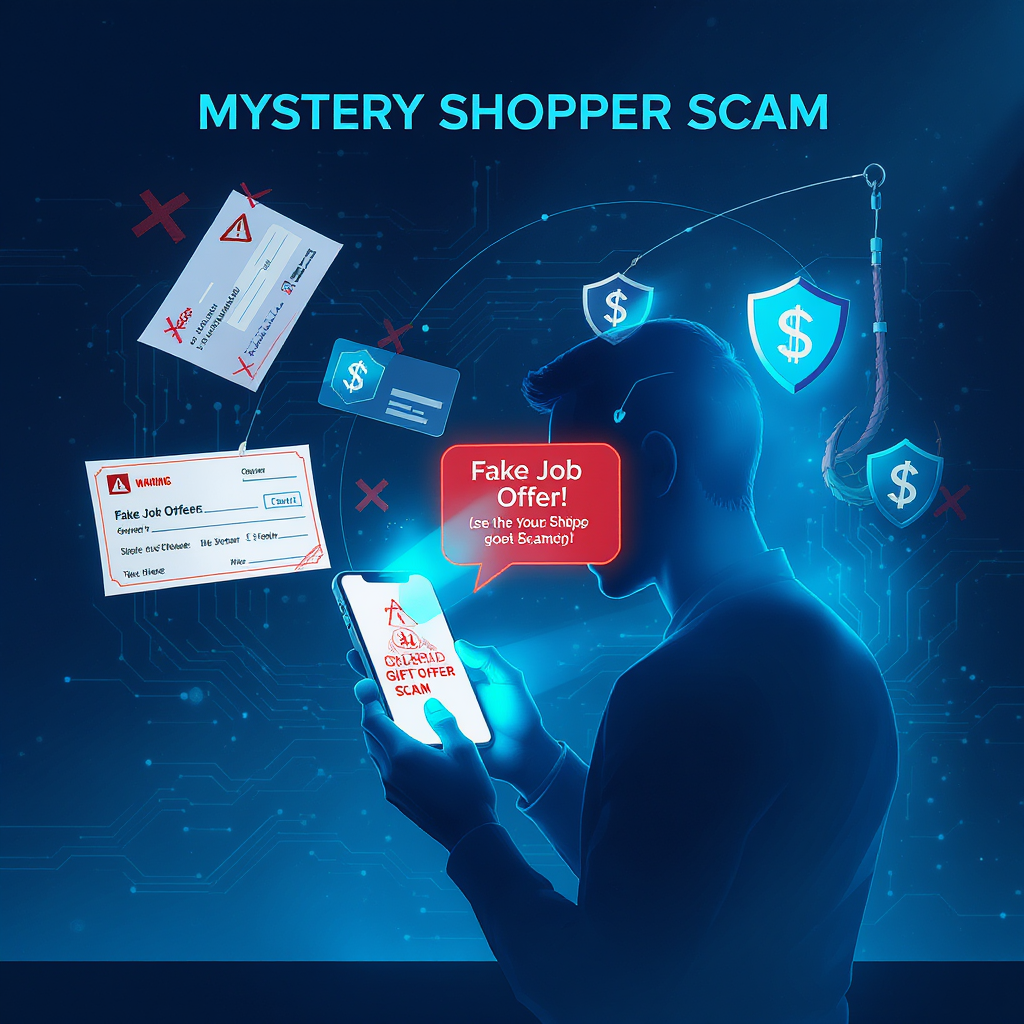
Hook
Sarah's eyes lit up when she saw the email in her inbox: "Congratulations! You've been selected as a Mystery Shopper for major retailers in your area. Earn 300-500 per assignment!" As a part-time student in Vancouver struggling with rising costs, the opportunity seemed like a godsend. The email looked professional, complete with a company logo and detailed instructions. She was told to deposit a 2,800 cheque they'd send her, keep $400 as payment, and use the rest to purchase gift cards from various stores to "test their customer service." It wasn't until she was standing at the Walmart customer service counter, trying to explain to her bank why she owed them nearly three thousand dollars, that Sarah realized she'd become the latest victim of one of Canada's most persistent employment scams.
What This Scam Is
The mystery shopper scam is a fraudulent scheme where criminals pose as legitimate market research companies, promising easy money for evaluating retail stores, restaurants, or services. Victims receive fake job offers to become "mystery shoppers" or "secret shoppers," but instead of earning money, they end up losing hundreds or thousands of dollars through fake cheque scams, advance fee fraud, or identity theft. While legitimate mystery shopping jobs do exist, scammers exploit this real industry to create convincing fake opportunities that prey on people seeking flexible, well-paying work.
How the Scam Typically Works
1. The Bait
Scammers cast a wide net through unsolicited emails, text messages, social media posts, or online job boards advertising mystery shopping positions. They often target students, retirees, or anyone who's recently posted a resume online. The job descriptions promise attractive pay ($15-50 per hour), flexible schedules, and simple tasks like shopping at popular stores or eating at restaurants. No experience is required, and victims can supposedly start immediately.
2. The Hook
Once someone responds, scammers send official-looking paperwork, including fake contracts, company letterhead, and detailed instructions. The victim receives a cheque (often for $1,000-5,000) with instructions to deposit it, keep a portion as their "payment," and use the remainder to purchase gift cards, money orders, or wire transfers as part of their "assignment." The scammer may ask them to evaluate the customer service at stores like Walmart, Best Buy, or grocery chains by making these purchases.
3. The Pressure
Scammers create urgency by setting tight deadlines for completing the assignment, often within 24-48 hours. They may call frequently to "check in" and emphasize the time-sensitive nature of the evaluation. Some claim the victim is being tested for a larger, more lucrative contract. If victims hesitate or ask questions, scammers may become pushy or offer bonuses for quick completion.
4. The Payoff (for the Scammer)
The cheque is fake, but it can take banks several days or weeks to discover this. During that time, the victim purchases gift cards or sends money transfers using the fraudulent funds. Once they provide the gift card numbers or transfer confirmation to the scammer, that money is immediately stolen and nearly impossible to recover. When the fake cheque bounces, the victim is responsible for the full amount to their bank, often losing thousands of dollars.
Red Flags to Watch For
• Unsolicited job offers arriving via email, text, or social media
• Upfront payments via cheque before any work is completed
• Instructions to purchase gift cards or wire money as part of the job
• Pressure to act quickly or complete assignments within hours
• Poor grammar and spelling in official communications
• Generic company names like "Consumer Research Group" or "National Shopping Service"
• Requests for personal information including SIN numbers or banking details upfront
• Communication only through email or text with no legitimate business address
• Pay rates that seem too good to be true for simple shopping tasks
• Instructions to keep the job confidential or not discuss it with others
How to Protect Yourself
Verify before you trust. Research any company offering mystery shopping jobs through the Better Business Bureau, Google reviews, and the Mystery Shopping Providers Association. Legitimate companies will have established online presences and verifiable contact information.
Never deposit suspicious cheques. Real mystery shopping companies pay after you complete assignments, not before. If someone sends you money upfront, it's almost certainly a scam.
Protect your personal information. Don't provide your Social Insurance Number, banking details, or copies of identification until you've thoroughly verified a company's legitimacy through independent sources.
Use secure job search methods. Stick to reputable job boards and be wary of opportunities that find you rather than ones you actively apply for. Set your social media profiles to private to avoid being targeted.
Trust your instincts. If an opportunity seems too good to be true or creates pressure to act immediately, step back and investigate further. Legitimate employers understand that good candidates need time to make informed decisions.
Real Examples
Sample Email:
"Subject: Mystery Shopper Position - Start Today!
Dear Job Seeker,
You have been selected for a Mystery Shopping assignment in your area. Your task is to evaluate Walmart's customer service and money transfer services.
Assignment Details:
- Compensation: $400
- Time Required: 2-3 hours
- Start Date: Immediately
You will receive a certified cheque for 2,750. Deposit this cheque, keep 400 as your fee, and use the remaining $2,350 to purchase gift cards. Evaluate the staff's helpfulness and report back.
Reply with your full name and address to begin.
Best regards,
Consumer Research Solutions"
Red flags: Immediate start, upfront payment, gift card purchases, vague company name, no legitimate contact information.
Sample Text Message:
"Congratulations! You've been selected for a mystery shopping job. Earn $300 for 2 hours of work. Text ACCEPT to start immediately. Limited positions available!"
Red flags: Unsolicited contact, pressure to respond quickly, no company identification, unrealistic pay rate.
Why This Scam Is Increasing
The mystery shopper scam has surged in Canada, particularly as economic pressures drive more people to seek flexible employment opportunities. The Canadian Anti-Fraud Centre reports that employment scams, including fake mystery shopping offers, have increased by over 40% in recent years.
Several factors contribute to this growth. Rising costs of living make attractive side-income opportunities more appealing to potential victims. The gig economy has normalized flexible, remote work arrangements, making mystery shopping seem more legitimate. Additionally, scammers have become more sophisticated, using AI to create more convincing emails and leveraging data from breaches to personalize their approaches.
Social media and online job boards have also made it easier for scammers to reach potential victims. They can quickly identify people seeking employment through their posts and profiles, then craft targeted messages that seem personalized and legitimate.
Expert Insight
Cybersecurity experts emphasize that employment scams like fake mystery shopping exploit both financial desperation and the desire for flexible work. "These scams are particularly effective because they mimic legitimate opportunities that actually exist," notes fraud prevention specialists. "Scammers have studied real mystery shopping companies and replicate their processes, making detection much more challenging for victims."
The key difference lies in the payment structure: legitimate mystery shopping companies pay modest amounts after assignments are completed and verified, while scammers promise large upfront payments that require victims to spend their own money first.
What to Do If You’re Targeted or Victimized
If you receive a suspicious mystery shopping offer:
- Don’t respond or provide any personal information
- Research the company independently using official business directories
- Contact legitimate mystery shopping associations to verify the opportunity
- Report the scam attempt to the Canadian Anti-Fraud Centre
If you've already been victimized:
- Contact your bank immediately to report the fraudulent cheque and any unauthorized transactions
- File a report with local police and provide all documentation
- Report the incident to the Canadian Anti-Fraud Centre at 1-888-495-8501
- Keep all evidence, including emails, cheques, and receipts
- Monitor your credit reports for any suspicious activity
- Don’t be embarrassed—these scams are sophisticated and fool many intelligent people
Final Takeaway
Real mystery shopping jobs exist, but they pay modest amounts after you complete legitimate assignments—they never send you money first and ask you to spend it on gift cards. When someone offers you easy money upfront, remember Sarah's expensive lesson: if it sounds too good to be true, it's probably designed to empty your wallet, not fill it.
