



Welcome back to the Abstract! Here are the studies this week that transcended realms, switched sexes, went south, and expanded their range.
First, scientists break new ground in trying to get the universe to fit nicely together into a little package for once. Then: a frog sex party, an invasion of pines, and the pumas of the past.
As always, for more of my work, check out my book First Contact: The Story of Our Obsession with Aliens, or subscribe to my personal newsletter the BeX Files.
A “coexist” bumper sticker, but for the universe
One of the biggest headaches in modern science is the inexplicable coexistence of Einstein’s general theory of relativity with quantum physics. Einstein’s theory describes forces and matter on large scales, like planets or galaxies, whereas the quantum world of atoms and particles follows a completely different rulebook.
Yet evidently—*points at universe*—both simultaneously exist. What gives?
Now, researchers have made a breakthrough on this century-old question by experimentally bringing one of Einstein’s best brain-nuggets, known as the equivalence principle, into the quantum realm.
This principle states that the effects of gravity and acceleration are locally equivalent. In other words, the weightlessness experienced by a free-falling object is indistinguishable from the weightlessness of an object in space. One well-worn example is to imagine a person in a falling elevator who becomes weightless, which is analogous to the experience of an astronaut in orbit. (Sorry, imaginary elevator person! Hope you get to come back as a happier thought experiment).
The reverse is also true: The weight experienced by a person standing on the surface of Earth, and experiencing the planet’s gravity, is also indistinguishable from the weight of a person standing in an accelerating rocket, despite the fact that these effects are conferred by completely different phenomena.
The equivalence principle is well-tested on large objects, but scientists have now proved that it holds up on quantum scales too. Using a new instrument called the Quantum Galileo Interferometer (QGI), they split waves linked to the same atom into two paths, one of which was placed in free-fall, and compared the outcomes.
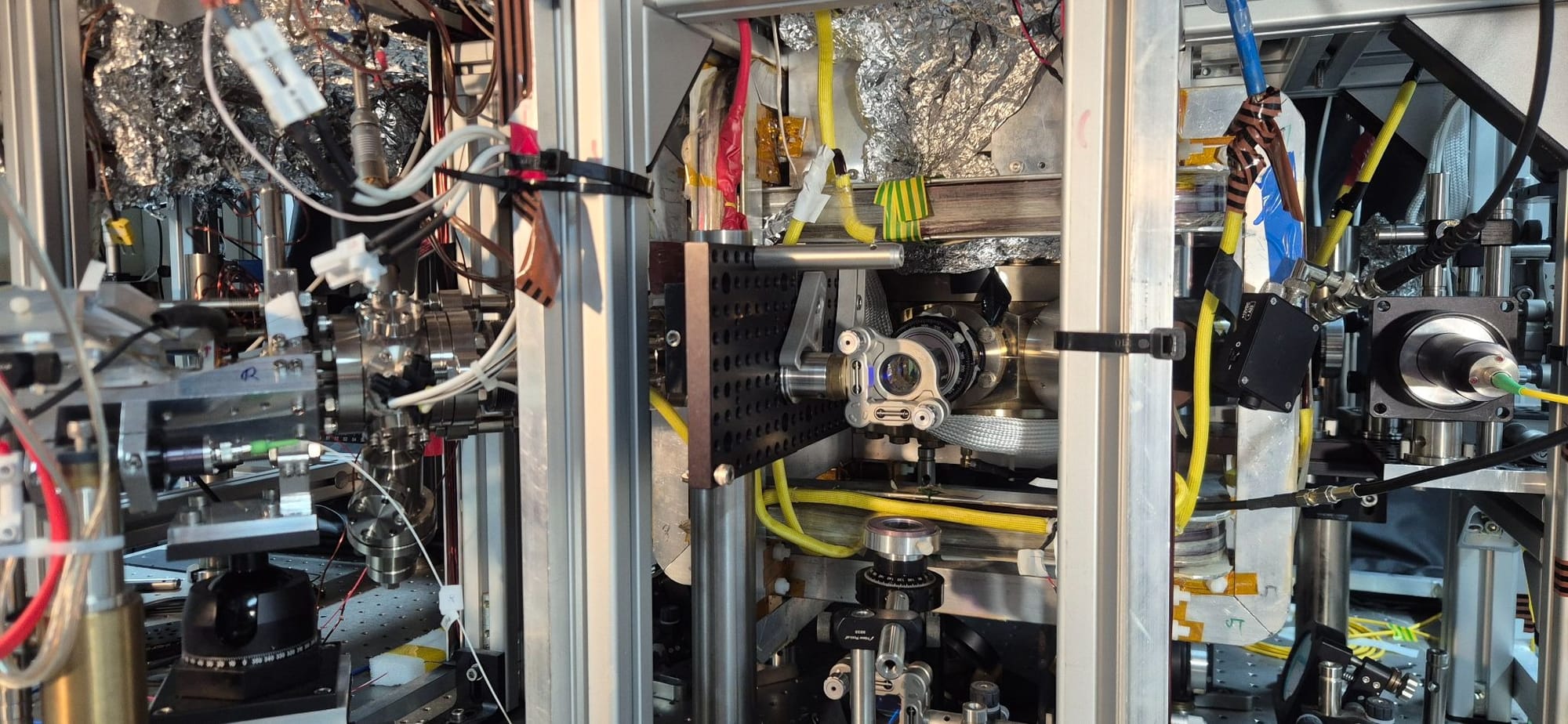
The results revealed that “the equivalence principle may be applied to the quantum domain,” which constitutes “a fundamental test of the interface between quantum theory and gravity,” according to the study.
“The two pillars of 20th century physics—quantum mechanics (QM) and general relativity (GR)—have long stood side by side, resisting all attempts to bring them convincingly together,” said researchers led by Or Dobkowski of Ben-Gurion University of the Negev.
“The connection between these two pillars of modern physics remains one of the most important open questions in physics, and it is thus of paramount importance to understand the phenomenon of free fall and the equivalence principle (EP) also in the quantum domain,” the team continued. “We are able to show that the EP may be applied to a quantum [wave packet]” which“enables the observation of the phase enabling the coexistence of QM and the EP.”
This study represents a major step toward understanding how these two systems cohere, but it is far from the holy grail of physics—a unified theory of the universe that finally brings them together. A lot more imaginary people will have to suffer terrifying thought experiments before that nut gets cracked, assuming it ever does.
Frogs in a boiling pot planet
As we all know from the documentary Jurassic Park, many frog species can switch between sexes under different environmental pressures. Given that heat is one factor that can prompt these “sex reversals,” scientists set out to study how climate change might impact frog reproduction.
Naturally, it involved watching lots of frog sex, as the grand enterprise of science often demands. In this case, researchers collected hundreds of wild agile frogs (Rana dalmatina) including sex-reversed males, which had been hatched as females, and “sex-concordant” males that never underwent sex reversal.
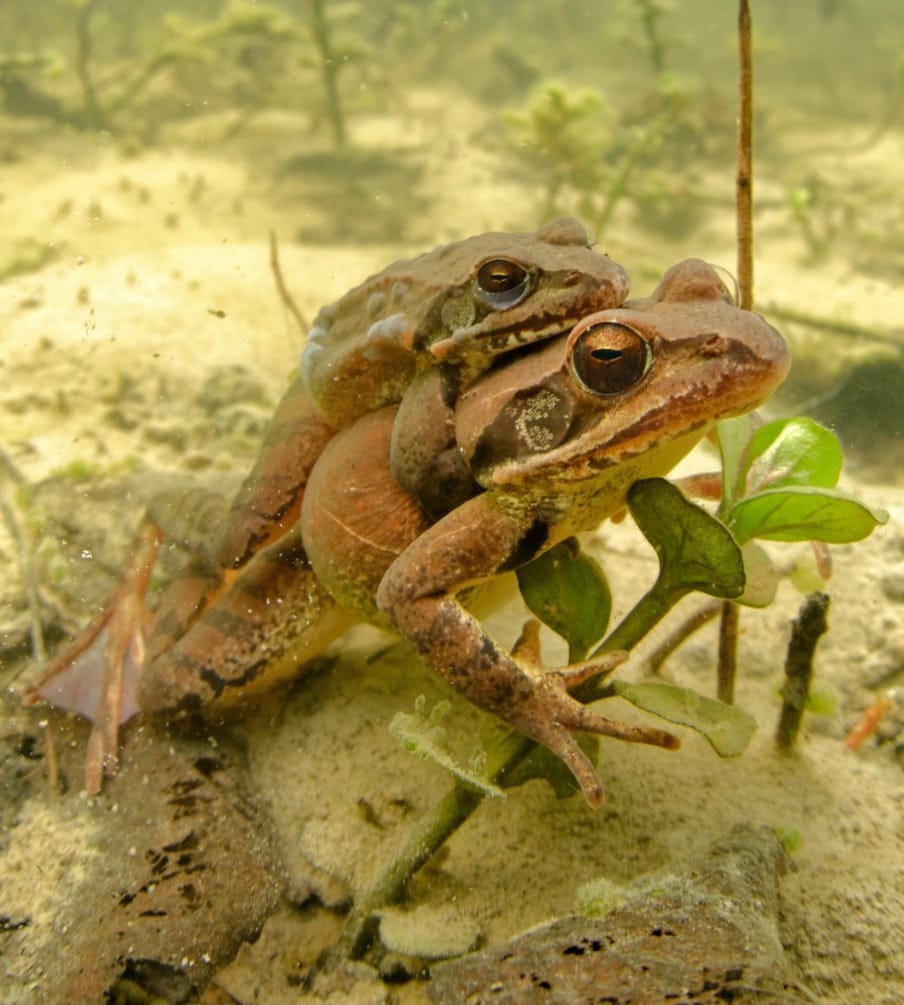
They found that the sex-reversed males had no problem competing for reproductive access to females or siring offspring. But their offspring had some vulnerabilities to viral diseases compared to the offspring of the other males—and that may have dire biodiversity consequences at larger scales. That said, the team emphasized that the dynamics of sex reversal during climate change are bound to be very complicated and require much more research.
“While some of these effects might result in disadvantages when it comes to breeding, this does not necessarily mean that sex reversal itself is disadvantageous to fitness,” said researchers led by Veronika Bókony of the Centre for Agricultural Research in Hungary.
“To the contrary, it is hypothesized that sex reversal is the ‘best out of a bad job,’ whereby individuals handicapped by their early environment can switch to the phenotypic sex that is less disadvantaged than the other,” the team added. “This idea has received very little empirical and no explicit theoretical testing yet, but if it proves true, it might mean that the future is not as dark as what the models predicted so far.”
Life finds a way, so the famous line goes, but it is non-linear and needs more funding.
Invasion of the conifers
Speaking of complex adaptations to a warming world, scientists report that pine trees from the Northern Hemisphere that are planted in the Southern Hemisphere are dramatically more resilient to drought and other pressures than their native counterparts.
By assessing forests at 192 sites, the team revealed that “Northern Hemisphere conifers grow up to four times faster in the Southern Hemisphere and are also more resistant and resilient to drought than conspecifics in native ranges, suggesting that non-native populations respond fundamentally different to abiotic stress,” according to the study.
These fast-growing pines are a mixed bag—on the one hand, they are more effective carbon sinks, offering a much-needed buffer against climate change. However, they are a little too successful, and threaten native species by rapidly invading forests.
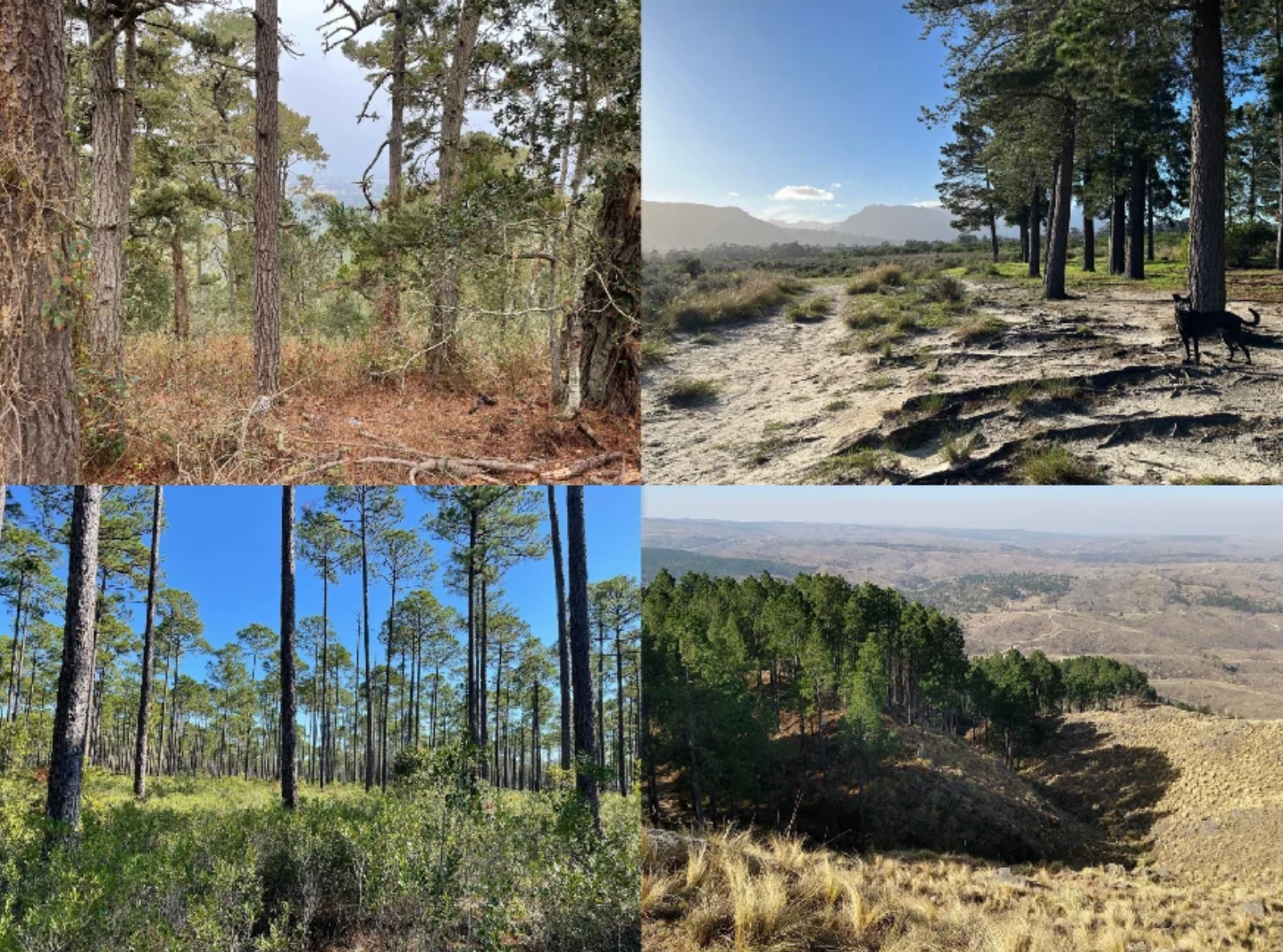
“Plantations have eradicated millions of hectares of native ecosystems in the Southern Hemisphere and invasions by P. contorta and P. elliottii erupting out of these plantations have greatly reduced native species richness,” said researchers led by Alex Fajardo of the University of Talca in Chile.
“This paradoxical combination of high growth rates yet resilience to drought emphasizes the importance of integrating eco-evolutionary history into ecological theory and is relevant for assessing the ultimate role of afforestation as global carbon sinks,” the team added.
It’s unclear why the Northern pines are such arboreal powerhouses, but their complicated impacts on local native ecosystems—and the world at large—will play a role in shaping the climate of the future.
The American cheetah changes its spots
Last, a blast from the past: Until around 16,000 years ago, a sleek sprinting cat called Miracinonyx trumani prowled North America, earning the name the “American cheetah.” But it turns out that this species was more closely related to pumas, according to a new genetic analysis of four Miracinonyx specimens that revealed new insights into the mysterious predator.
“The extinct ‘American cheetah’ (Miracinonyx trumani) has long been considered a North American ecological analog of the African cheetah…yet this paradigm rests on limited data and untested assumptions about its evolutionary relationships and ecology,” said researchers led by Molly Cassatt-Johnstone of the University of California, Santa Cruz.
“Phylogenomic analyses confirm M. trumani as sister to pumas (Puma concolor), not cheetahs, with a divergence of ∼2.6 million years ago,” the team added.
In addition to clarifying its place in the feline family, the researchers unexpectedly discovered that their specimens all belonged to the same Miracinonyx species, despite ranging in origin from Wyoming to the Yukon Territory.
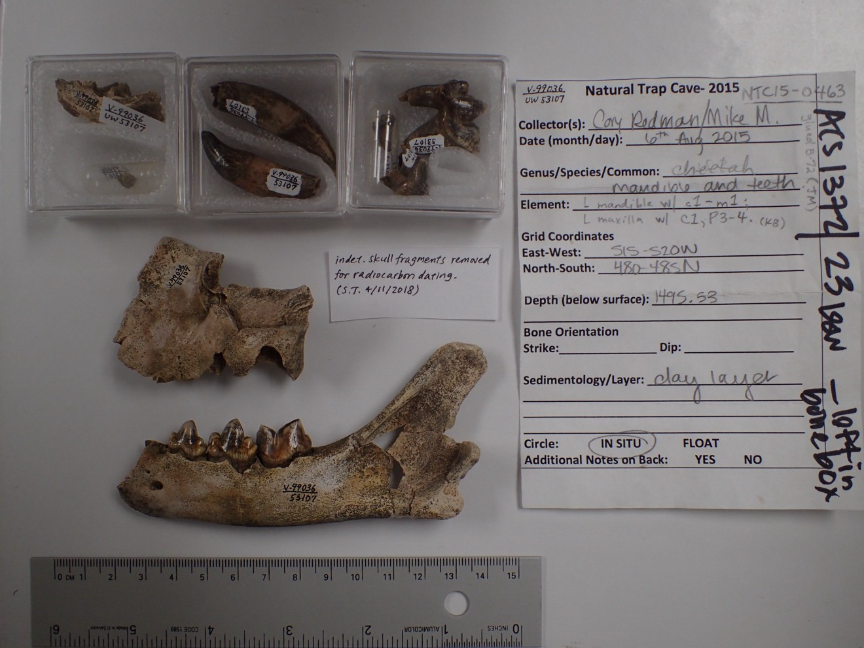
This hunter clearly had a huge range and was highly adaptable to wildly different environments, challenging the assumption that it primarily preyed on the pronghorn antelope. Indeed, the Yukon specimens appeared to have been fish-eaters that were adapted to the extreme conditions of the Arctic.
These cats belonged to the amazing diversity of Ice Age megafauna, which included rival extinct predators like cave lions (Panthera spelaea), scimitar cats (Homotherium latidens), and short-faced bears (Arctodus simus), in addition to extant species like gray wolves and brown bears. Their genetic remnants speak to the complexity of this lost world, and offer a glimpse of a not-so-distant past populated with spectacular animals.
Thanks for reading! See you next week.
