


Welcome back to the Abstract! These are the studies this week that went interstellar, entombed the sky, hit the gas, and renewed the world.
First, scientists predict that there are thousands of objects from alien star systems lurking in the outer reaches of the solar system. Then: ancient air is hidden in glassy Moon beads, the “worst energy policy in the world,” and a mysterious Mississippian luxury.
As always, for more of my work, check out my book First Contact: The Story of Our Obsession with Aliens, or subscribe to my personal newsletter the BeX Files.
The interstellar objects we met along the way
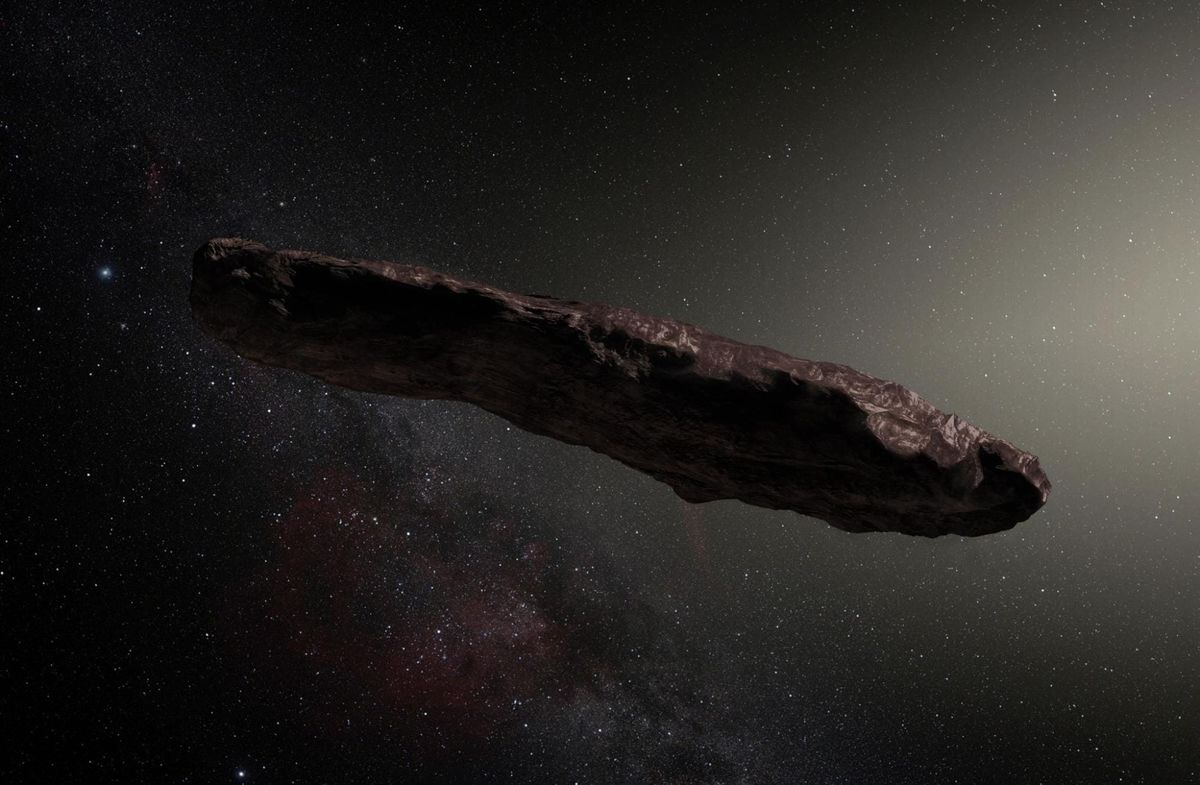
Over the past decade, three interstellar objects have been spotted streaking through our solar system. It’s likely that dozens more of these interlopers will be discovered in the coming years. These objects travel so fast that they can escape the gravitational clutches of the Sun, which is why they are only visible for weeks before hurtling back out to speed-run the galaxy.
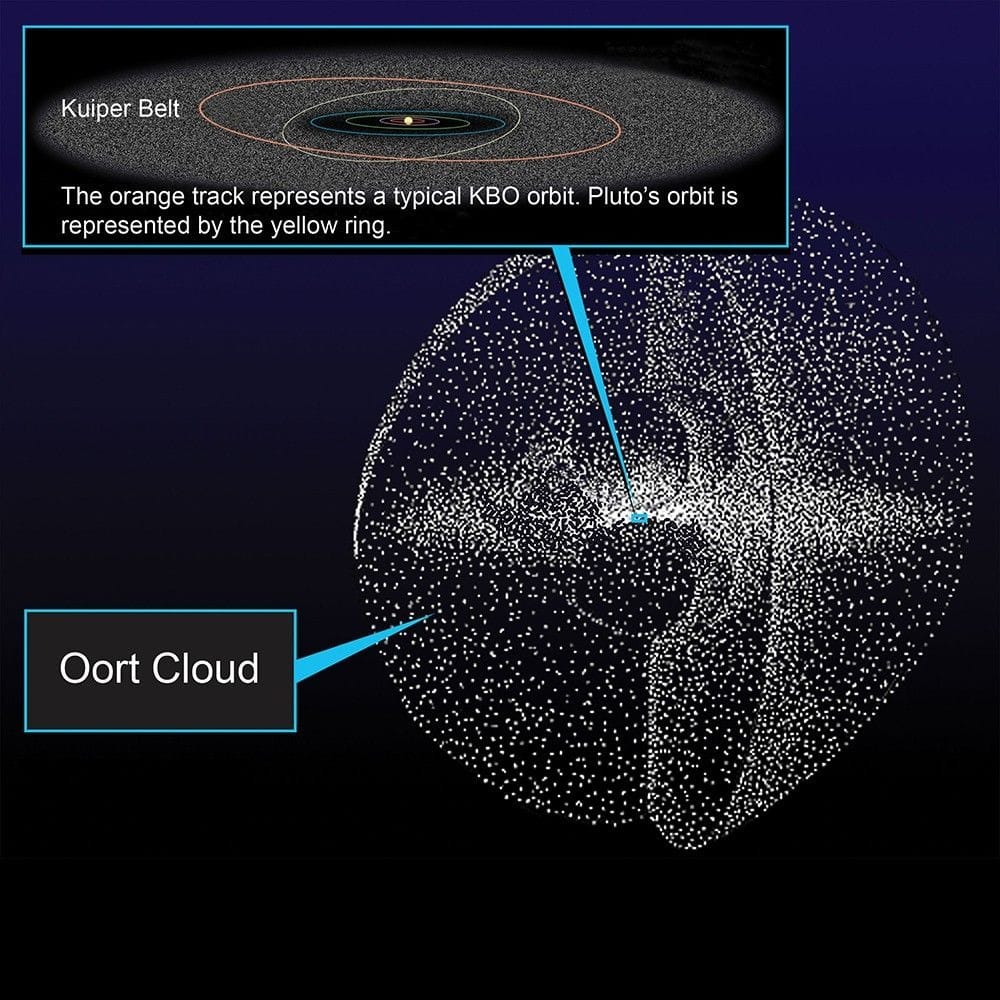
But while some interstellar objects (ISOs) leave in a hurry, others may be here to stay, lurking in the outermost reaches of the solar system, known as the Oort cloud, reports a new study.
Over the course of its 4.6-billion year lifespan, the Sun has wandered close enough to other stars to collect thousands of non-native objects from the fringes of those passing systems. It may have also sent off many of its homegrown objects to join alien star systems during these encounters, like some kind of stellar gift exchange.
“The Solar System has long been suspected to contain captured, non-native material,” said researchers led by Sean Raymond of the Bordeaux Astrophysics Laboratory. “The recent ISO discoveries have now confirmed directly that extraterrestrial material regularly passes through the Solar System.”
Drawing on these discoveries, Raymond and his colleagues ran models to predict how many ISOs might be exchanged between stars during close encounters, called stellar flybys. The Sun is estimated to have had at least one or two of these meetups during its life so far, which could be “responsible for a large fraction of the captured ISOs currently residing in the Solar System.”
“Given that flybys are unavoidable in the Galactic field, most stars should host sparse Oort clouds populated with ISOs captured during stellar flybys,” the team said.
The Oort cloud — composed of frozen comet-like objects — extends for about three light years away from the Sun, so it’s not currently possible to send a spacecraft to go out to sift for ISOs in these distant wilds. Still, it’s neat to know there are so many interstellar hitchhikers riding in the Sun’s backseat.
Ancient magic Moon beads
A memory of an ancient ephemeral sky on the Moon may be locked inside glass beads scattered across the lunar surface, according to a new study.
The Moon is airless, but there’s evidence that it was surrounded by a transient atmosphere billions of years ago, which was fed by volcanic eruptions in its early history. Rocks crashing into the surface may have also vaporized material and created brief, gassy skies over time.
Scientists have now examined glass beads that were scooped up from the far side of the Moon by China’s Chang’e 6 sample-return mission, and delivered back to Earth in the summer of 2024 (that’s so Brat). The lunar glass, which was forged by rocks crashing into the surface, captured the chemical signatures of the vapor plume created by those impacts, capturing a whiff of a long-lost transient atmosphere.
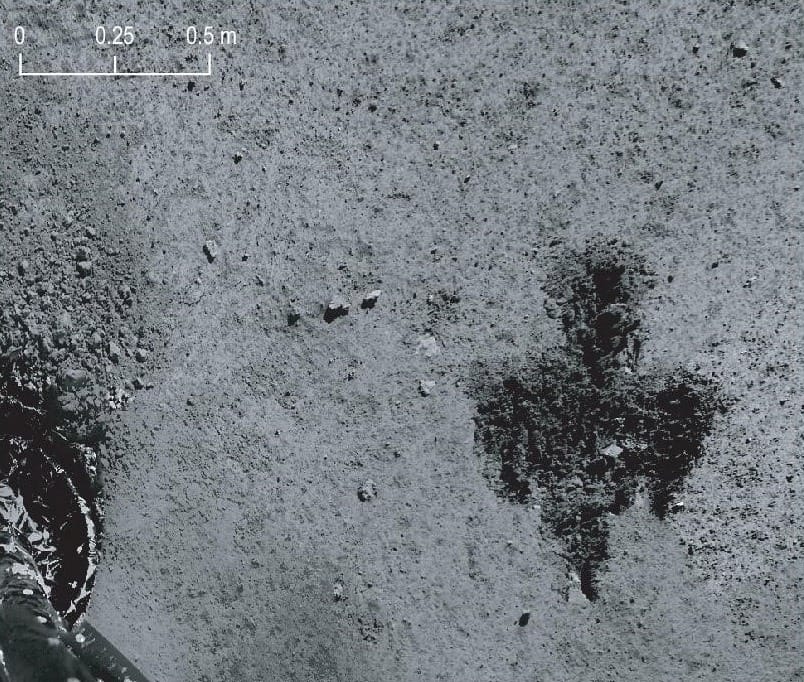
“Chang’e 6 (CE6) mission has returned the first lunar samples from the farside of the Moon,” said researchers led by Ziyan Han of Nanjing University. “The returned CE6 lunar regolith contains impact glass beads that could have recorded impact-induced vaporization on the Moon’s farside and may serve as barometers, providing critical constraints on the global distribution of the Moon’s transient atmosphere.”
The team noted that these fleeting impact-induced atmospheres might exist on other airless bodies in the solar system, and beyond it. For this reason, the researchers warned that atmospheres detected around exoplanets “may not always solely represent stable, long-lived atmospheres” which could “complicate the interpretation of atmospheric data as evidence of long-term planetary habitability on the rocky exoplanets.”
There you have it—just some ancient glass beads that contain the breath of past lunar skies. Carry on.
The real cost of cheaper gas
Mahdavi, Paasha and Ross, Michael L. “The worst energy policy in the world.” Science.
How bad does an energy policy have to be for experts to declare it the worst in the world? Buckle up because we are hitting the gas.
In an editorial published in Science this week, a pair of researchers lament the widespread rollout of consumer fossil fuel subsidies in response to the spike in gas and oil prices caused by the U.S.-Israel war with Iran. While it’s understandable for governments to want to ease financial hardships, the team stressed that these subsidies are a major setback to confronting the climate crisis and they fumble the chance to present the Iran war as a clear example of why we need to reduce global reliance on fossil fuels.
“Consumer fuel subsidies are the worst kind of energy policy: they boost the most polluting kind of energy—fossil fuels—with a policy that is wasteful and deceptively hard to reverse,” said authors Paasha Mahdavi of the University of California, Santa Barbara and Michael L. Ross of the University of California, Los Angeles.
“The Iran war represents a once-in-a-generation opportunity to accelerate the transition away from fossil fuels,” the team continued. “But short-term measures that governments are taking—to help their citizens cope with unaffordable gasoline and diesel prices—will have long-term effects. Making fossil fuels cheaper now will have catastrophic consequences in the future.”
To channel the old joke from The Simpsons: “It’s the worst energy policy in the world…so far.”
A Mississippian taste for cacao
Let’s close with a finely-aged dessert. And I mean, really aged—this decadent treat is 1,000-years-old.
Humans have been consuming the delectable fruits of the cacao tree for many thousands of years in Central and South America, and the plant made its way into parts of North America, such as the American Southwest. Now, archaeologists have discovered cacao was also consumed as far east as the Etowah Site in Georgia, an ancient city built by the Mississippian culture, revealing the unexpected spread of the delicacy deep into the Southeast.
“There is very little material evidence of connections between people living in Mississippian places like Etowah and those living in Central America,” said researchers led by Adam King of the University of South Carolina. “As a result, the possibility that the Mississippian world had access to cacao has always seemed remote.”

But one should never underestimate the power of chocolate, and this study bears that wisdom out. When the team analyzed ancient DNA sequences of residue found on Etowah pottery, they detected notes of cacao.
“Despite the fact that Etowah is separated from potential sources of cacao by great distances, ancient DNA confirms the site’s inhabitants consumed cacao,” the team said. The researchers speculated that Etowah may have sourced its cacao from trade routes to Mexico or the American Southwest, but noted that no “direct connections to Mexico nor the American Southwest are supported by archaeological evidence for now.”
“These results ask us to reopen lines of research long closed, especially regarding contacts between the impressive civilizations of Central and South America and the great Mississippian civilization of the Eastern Woodlands,” King and his colleagues said in the study.
As to the cultural role of cacao, the study suggested that “at Etowah and possibly across the Mississippian world, cacao consumption played a role in world renewal rites of intensification.”
Given the previous story about fossil fuels subsidies, we need all the world renewal rites we can get, so eat dessert first.
Thanks for reading! See you next week.
