



Welcome back to the Abstract! Here are the studies this week that busted their butts, scaled great heights, got it right, and discovered a new world.
First, Hannibal marched an army of men, horses, and elephants over the Alps to threaten Rome. Scientists ask the question: Just how hard did they grind? Then, the mouse at the top of the world, the ancient origins of handedness, and a throwback to the alien megastructures.
As always, for more of my work, check out my book First Contact: The Story of Our Obsession with Aliens, or subscribe to my personal newsletter the BeX Files.
Try the Hannibal diet (no, not the Lecter one)
In 218 BC, the Carthaginian general Hannibal Barca marched an army of 46,000 men and 37 war elephants over the Alps to threaten Rome right at its doorstep. This brash advance in the Second Punic War has become one of the most legendary military moves of all time, even though Hannibal was ultimately unsuccessful in his mad dash to sack Rome.
Yet despite the prominent place of this march in history, the exact route that Hannibal took over the Alps remains unknown. Now, scientists have taken a fresh stab at the millennia-old mystery by calculating how much energy various route options would have cost the troops and elephants. Though experts have generally considered a route called the Col du Clapier to be most likely, the new results suggest an alternate route known as the Col de la Traversette would have exacted less energy from the advancing army, which might have boosted its odds as Hannibal’s choice of crossing.
“Most of the discussions concerning Hannibal’s crossing were guided by philological and geological considerations, which tend to ignore the biology of the men and animals,” said authors Emilio Berti of Halle-Jena-Leipzig and Fritz Vollrath of the University of Oxford.
“Compared to choosing the Col de la Traversette, the routes via the Col de Montgenèvre, Col du Clapier, and Col du Mont Cenis would have required 11%, 16%, and 19% more energy, respectively, for the army as a whole,” the team continued. “Although Hannibal would not have had such accurate estimates, he may have had a qualitative understanding of the ranking of the possible routes. In which case, driven by the aim to minimize the energy costs of the crossing, he would have chosen the Traversette route.”
While this study does not resolve the tantalizing question of exactly where Hannibal hauled ass over the Alps, it sheds new light on the immense costs of this ancient act of bravado. Berti and Vollrath estimated that even if the army took the path of least resistance—the Col de la Traversette—the “elephants would have lost 4% of their body fat reserves, horses 11%, and men 19%.”
Invading Rome: The ultimate weight loss plan. Considering that half of Hannibal’s troops died during the crossing, this diet is not recommended.
In other news…
The mighty mountain mouse
Speaking of alpine survival, meet the Andean leaf-eared mouse (Phyllotis vaccarum). This little critter can live more than four miles above sea level, on the dizzying peaks of the Andes mountains, making it by far the highest-dwelling mammal on Earth.
The mouse has surpassed the “known elevational range limits of all other terrestrial vertebrates” which “were previously thought to be uninhabitable by mammals owing to severe hypoxia and frigid temperatures,” according to a new study about this mouse’s amazing adaptations.

To understand how this unassuming mouse survives up in the clouds, scientists analyzed the genomes of 167 leaf-eared mice collected across their range, which spans the lowlands all the way up to high Andean slopes, and compared them to their more grounded mouse relatives. The results revealed that the mountain mice have evolved a unique set of adaptations that are distinct from many other alpine animals, including the ability to metabolize toxic plants.
“The world’s highest-dwelling mammal has adapted to habitats at both the low- and high-elevation limits of its range, and much of the elevation-related selection relates to previously unappreciated aspects of feeding ecology,” the team concluded.
Mmm…toxic salads. Keep on living the high life, P. vaccarum.
A handy discovery at the dawn of complex life
Paleontologists have discovered the oldest potential evidence of a right-handed animal, though the 550-million-year-old seacrawler in question doesn’t actually have hands. Spriggina floundersi, an inch-long weirdo that lived in the Ediacaran period, has long fascinated scientists because it appears to be one of the first animals in the fossil record capable of locomotion.
When scientists took a closer look at more than 100 exquisite Spriggina fossils from South Australia, they discovered that about twice as many of them seemed bent to the left compared to the right, suggesting that the animal had a preferred direction of motion, or “handedness.” In this case, it was right-handed because the fossils are preserved in negative hyporelief, meaning that they are mirror images of the animal.
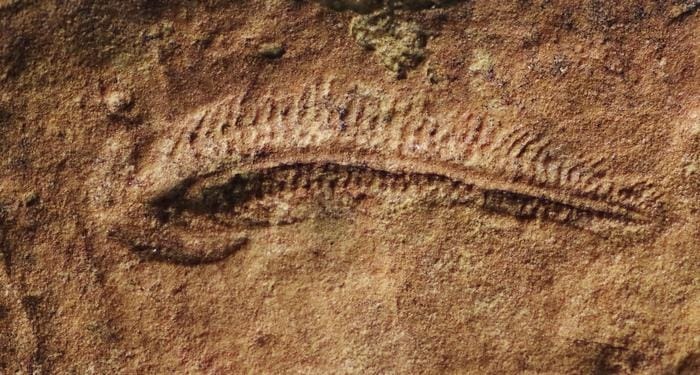
“A significant number of fossil specimens are bent to the left (right in life),” said researchers led by Scott D. Evans of the American Museum of Natural History. “The nature of these bends does not match expectations of anatomical asymmetry and instead constitutes the oldest described evidence of behavioural handedness.”
Now, the search is on for the elusive Ediacaran leftie.
It’s never aliens
Before there were interstellar objects and Pentagon UFO videos to ignite our extraterrestrial imaginings, there was Tabby’s Star, also known as KIC 8462852. Discovered in 2015, the star’s strange light patterns, which fluctuate significantly, sparked speculation that it might be orbited by “alien megastructures,” such as a massive solar energy plant called a Dyson sphere.
Now, scientists have discovered evidence of a huge planet transiting Tabby’s Star—meaning that it passed in front of the star from our perspective on Earth—which might help provide a natural exploration for its unusually pronounced dimming events. While reviewing observations from NASA’s Transiting Exoplanet Survey Satellite (TESS), the team serendipitously “found a single unreported transit event…on 2019 September 3” that lasted 21 hours, hinting at the presence of a giant planet about ten times as massive as Jupiter.
“No transiting companion has ever been detected around this well-known star, so the potential evidence of a candidate presented in this work is significant, as its existence could explain the complexity of the system,” said researchers led by Cristina Madurga-Favieres of the University of Warwick. “The strongest theory is that a group of exocomets or planetesimal fragments are responsible for the irregular and apparently non-periodic dips…of Tabby’s star. The presence of a companion would explain why these bodies are driven to the vicinities of the star, breaking up, as it would orbitally perturb them.”
In other words, the huge planet may be gravitationally hoisting a flock of smaller bodies into orbit around the star, producing the dimming events. While it’s not quite as sensational as a colossal alien power plant, it may help resolve the decade-long mystery of this strange star.
Thanks for reading! See you next week.
