



Close Menu

    Subscribe to Updates

    Get the latest creative news from FooBar about art, design and business.

    What's Hot

    US charges Google security engineer with Polymarket insider trading

    May 30, 2026

    CVE-2026-10152 | THREATINT

    May 30, 2026

    SSA-645131 V1.0: Multiple WRL File Parsing Vulnerabilities in Teamcenter Visualization

    May 30, 2026
    Facebook X (Twitter) Instagram
    • Demos
    • Technology
    • Gaming
    • Buy Now
    Facebook X (Twitter) Instagram Pinterest Vimeo
    Canadian Cyber WatchCanadian Cyber Watch
    • Home
    • News
    • Alerts
    • Tips
    • Tools
    • Industry
    • Incidents
    • Events
    • Education
    Subscribe
    Canadian Cyber WatchCanadian Cyber Watch
    Home»News»Ubiquiti patches three max severity UniFi OS vulnerabilities
    News

    Ubiquiti patches three max severity UniFi OS vulnerabilities

    adminBy adminMay 22, 2026No Comments3 Mins Read
    Share Facebook Twitter Pinterest LinkedIn Tumblr Reddit Telegram Email
    Share
    Facebook Twitter LinkedIn Pinterest Email


    Ubiquiti

    Ubiquiti has released security updates to patch three maximum severity vulnerabilities in Unify OS that can be exploited by remote attackers without privileges.

    UniFi OS is a unified operating system that powers UniFi Consoles and helps manage IT infrastructure, including networking, security, and other services, as well as UniFi applications such as UniFi Network, UniFi Protect, UniFi Access, UniFi Talk, and UniFi Connect.

    The first flaw (CVE-2026-34908) enables attackers to make unauthorized changes to targeted systems by exploiting an Improper Access Control weakness in Unify OS, while the second (CVE-2026-34909) allows them to access files on the underlying system by abusing a Path Traversal vulnerability, which could be manipulated to access an underlying account.

    A third maximum severity security issue (CVE-2026-34910) makes it possible for malicious actors to launch a command injection attack after gaining network access by exploiting an Improper Input Validation vulnerability.

    On Thursday, Ubiquiti also patched a second critical command injection flaw (CVE-2026-33000) and a high-severity information disclosure (CVE-2026-34911), both affecting Unifi OS devices.

    Ubiquiti has yet to disclose whether any of the five vulnerabilities were exploited in the wild before disclosure, but shared that they can be exploited in low-complexity attacks and were reported through its HackerOne bug bounty program.

    At the moment, threat intelligence company Censys is tracking nearly 100,000 Internet-exposed UniFi OS endpoints, most of them (nearly 50,000 IP addresses) found in the United States.

    However, there is currently no information on how many have been secured against potential attacks targeting the vulnerabilities Ubiquiti patched this week.
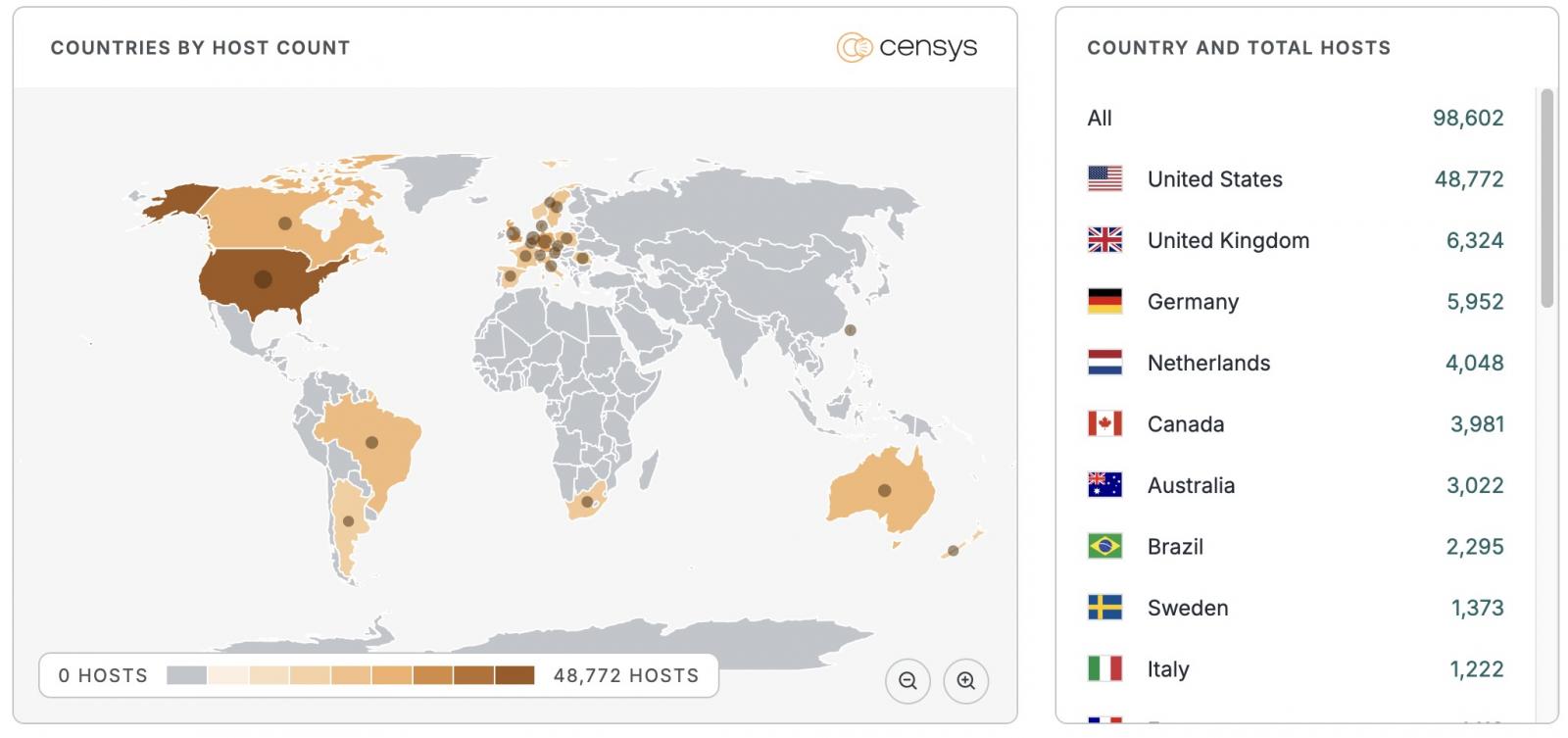
    UniFi OS endpoints exposed online
    UniFi OS endpoints exposed online (Censys)

    ​In March, Ubiquiti patched another maximum-severity flaw (CVE-2026-22557) in the UniFi Network Application that may allow attackers to take over user accounts, as well as a vulnerability (CVE-2026-22558) that can be exploited to escalate privileges.

    Ubiquiti products have been targeted by both state-backed hacking groups and cybercriminals in recent years, in campaigns that hijacked them to build botnets that concealed the threat actors’ malicious activity.

    For instance, in February 2024, the FBI took down Moobot, a botnet of hacked Ubiquiti Edge OS routers used by Russia’s Main Intelligence Directorate of the General Staff (GRU) to proxy malicious traffic in cyberespionage attacks targeting the United States and its allies.

    Four years ago, in April 2022, the U.S. Cybersecurity and Infrastructure Security Agency (CISA) also added a critical command injection flaw (CVE-2010-5330) in Ubiquiti AirOS to its catalog of actively exploited vulnerabilities and ordered federal agencies to secure their devices within three weeks.

    article image

    Automated pentesting tools deliver real value, but they were built to answer one question: can an attacker move through the network? They were not built to test whether your controls block threats, your detection rules fire, or your cloud configs hold.

    This guide covers the 6 surfaces you actually need to validate.

    Download Now


    Source link

    Share. Facebook Twitter Pinterest LinkedIn Tumblr Email
    Previous ArticleZDI-26-318: Progress Software Kemp LoadMaster ssodomain_killsession Command Injection Remote Code Execution Vulnerability
    Next Article Hitachi Energy GMS600 | CISA
    admin
    • Website

    Related Posts

    News

    US charges Google security engineer with Polymarket insider trading

    May 30, 2026
    News

    Palo Alto GlobalProtect VPN auth bypass flaw now exploited in attacks

    May 30, 2026
    News

    New CIFSwitch Linux flaw gives root on multiple distributions

    May 30, 2026
    Add A Comment

    Comments are closed.

    Demo
    Top Posts

    Catchy & Intriguing

    March 17, 202674 Views

    Defending Canada’s Digital Frontier: Combating Phishing, Social Engineering, Ransomware, and Malware

    March 23, 202629 Views

    The Essential Guide to Removing Computer Infections: Step-by-Step Remedies

    March 20, 202627 Views
    Stay In Touch
    • Facebook
    • YouTube
    • TikTok
    • WhatsApp
    • Twitter
    • Instagram
    Latest Reviews
    85
    Featured

    Pico 4 Review: Should You Actually Buy One Instead Of Quest 2?

    January 15, 2021 Featured
    8.1
    Uncategorized

    A Review of the Venus Optics Argus 18mm f/0.95 MFT APO Lens

    January 15, 2021 Uncategorized
    8.9
    Editor's Picks

    DJI Avata Review: Immersive FPV Flying For Drone Enthusiasts

    January 15, 2021 Editor's Picks

    Subscribe to Updates

    Get the latest tech news from FooBar about tech, design and biz.

    Demo
    Most Popular

    Catchy & Intriguing

    March 17, 202674 Views

    Defending Canada’s Digital Frontier: Combating Phishing, Social Engineering, Ransomware, and Malware

    March 23, 202629 Views

    The Essential Guide to Removing Computer Infections: Step-by-Step Remedies

    March 20, 202627 Views
    Our Picks

    US charges Google security engineer with Polymarket insider trading

    May 30, 2026

    CVE-2026-10152 | THREATINT

    May 30, 2026

    SSA-645131 V1.0: Multiple WRL File Parsing Vulnerabilities in Teamcenter Visualization

    May 30, 2026

    Subscribe to Updates

    Get the latest creative news from FooBar about art, design and business.

    Facebook X (Twitter) Instagram Pinterest
    • Home
    • Technology
    • Gaming
    • Phones
    • Buy Now
    © 2026 ThemeSphere. Designed by ThemeSphere.

    Type above and press Enter to search. Press Esc to cancel.