



Close Menu

    Subscribe to Updates

    Get the latest creative news from FooBar about art, design and business.

    What's Hot

    KMW CCTV Security Cameras | CISA

    May 30, 2026

    US charges Google security engineer with Polymarket insider trading

    May 30, 2026

    CVE-2026-10152 | THREATINT

    May 30, 2026
    Facebook X (Twitter) Instagram
    • Demos
    • Technology
    • Gaming
    • Buy Now
    Facebook X (Twitter) Instagram Pinterest Vimeo
    Canadian Cyber WatchCanadian Cyber Watch
    • Home
    • News
    • Alerts
    • Tips
    • Tools
    • Industry
    • Incidents
    • Events
    • Education
    Subscribe
    Canadian Cyber WatchCanadian Cyber Watch
    Home»News»Hackers exploit auth bypass flaw in Burst Statistics WordPress plugin
    News

    Hackers exploit auth bypass flaw in Burst Statistics WordPress plugin

    adminBy adminMay 14, 2026No Comments3 Mins Read
    Share Facebook Twitter Pinterest LinkedIn Tumblr Reddit Telegram Email
    Share
    Facebook Twitter LinkedIn Pinterest Email


    Hackers exploit auth bypass flaw in Burst Statistics WordPress plugin

    Hackers are leveraging a critical authentication bypass vulnerability in the WordPress plugin Burst Statistics to obtain admin-level access to websites.

    Burst Statistics is a privacy-focused analytics plugin active on 200,000 WordPress sites and marketed as a lightweight alternative to Google Analytics.

    The flaw, tracked as CVE-2026-8181, was introduced on April 23 with the release of version 3.4.0 of the plugin. The vulnerable code was also present in the following iteration, version 3.4.1.

    According to Wordfence, which discovered CVE-2026-8181 on May 8, the flaw allows unauthenticated attackers to impersonate known admin users during REST API requests, and even create rogue admin accounts.

    “This vulnerability allows unauthenticated attackers who know a valid administrator username to fully impersonate that administrator for the duration of any REST API request, including WordPress core endpoints such as /wp-json/wp/v2/users, by supplying any arbitrary and incorrect password in a Basic Authentication header,” explains Wordfence.

    “In a worst-case scenario, an attacker could exploit this flaw to create a new administrator-level account with no prior authentication whatsoever.”

    The root cause is the incorrect interpretation of the ‘wp_authenticate_application_password()’ function results, specifically, treating a ‘WP_Error’ as an indication of successful authentication.

    However, the researchers explain that WordPress can also return ‘null’ in some cases, which is mistakenly treated as an authenticated request.

    As a result, the code calls ‘wp_set_current_user()’ with the attacker-supplied username, effectively impersonating that user for the duration of the REST API request.

    Admin usernames may be exposed in blog posts, comments, or even in public API requests, but attackers can also use brute-force techniques to guess them.

    Admin-level access allows attackers to access private databases, plant backdoors, redirect visitors to unsafe locations, distribute malware, create rogue admin users, and more.

    While Wordfence warned in its post that they “expect this vulnerability to be targeted by attackers and, as such, updating to the latest version as soon as possible is critical,” its tracker shows that malicious activity has already begun.

    According to the same platform, the website security firm has blocked over 7,400 attacks targeting CVE-2026-8181 in the past 24 hours, so the activity is significant.

    Users of the Burst Statistics plugin are recommended to upgrade to the patched release, version 3.4.2, released on May 12, 2026, or disable the plugin on their site.

    WordPress.org stats show that Burst Statistics had 85,000 downloads since the release of 3.4.2, so assuming that all were for the latest version, there remain roughly 115,000 sites exposed to admin takeover attacks.

    article image

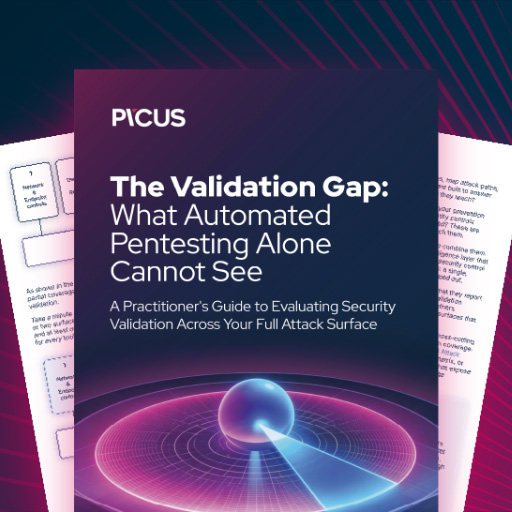
    Automated pentesting tools deliver real value, but they were built to answer one question: can an attacker move through the network? They were not built to test whether your controls block threats, your detection rules fire, or your cloud configs hold.

    This guide covers the 6 surfaces you actually need to validate.

    Download Now


    Source link

    Share. Facebook Twitter Pinterest LinkedIn Tumblr Email
    Previous ArticleZDI-26-313: Apple Safari Regular Expression Duplicate Named Groups Heap-based Buffer Overflow Remote Code Execution Vulnerability
    Next Article Microsoft Foundry Toolkit for VS Code: Command Injection via Python Interpreter Path Leading to Arbitrary Code Execution – Research Advisory
    admin
    • Website

    Related Posts

    News

    US charges Google security engineer with Polymarket insider trading

    May 30, 2026
    News

    Palo Alto GlobalProtect VPN auth bypass flaw now exploited in attacks

    May 30, 2026
    News

    New CIFSwitch Linux flaw gives root on multiple distributions

    May 30, 2026
    Add A Comment

    Comments are closed.

    Demo
    Top Posts

    Catchy & Intriguing

    March 17, 202674 Views

    Defending Canada’s Digital Frontier: Combating Phishing, Social Engineering, Ransomware, and Malware

    March 23, 202629 Views

    The Essential Guide to Removing Computer Infections: Step-by-Step Remedies

    March 20, 202627 Views
    Stay In Touch
    • Facebook
    • YouTube
    • TikTok
    • WhatsApp
    • Twitter
    • Instagram
    Latest Reviews
    85
    Featured

    Pico 4 Review: Should You Actually Buy One Instead Of Quest 2?

    January 15, 2021 Featured
    8.1
    Uncategorized

    A Review of the Venus Optics Argus 18mm f/0.95 MFT APO Lens

    January 15, 2021 Uncategorized
    8.9
    Editor's Picks

    DJI Avata Review: Immersive FPV Flying For Drone Enthusiasts

    January 15, 2021 Editor's Picks

    Subscribe to Updates

    Get the latest tech news from FooBar about tech, design and biz.

    Demo
    Most Popular

    Catchy & Intriguing

    March 17, 202674 Views

    Defending Canada’s Digital Frontier: Combating Phishing, Social Engineering, Ransomware, and Malware

    March 23, 202629 Views

    The Essential Guide to Removing Computer Infections: Step-by-Step Remedies

    March 20, 202627 Views
    Our Picks

    KMW CCTV Security Cameras | CISA

    May 30, 2026

    US charges Google security engineer with Polymarket insider trading

    May 30, 2026

    CVE-2026-10152 | THREATINT

    May 30, 2026

    Subscribe to Updates

    Get the latest creative news from FooBar about art, design and business.

    Facebook X (Twitter) Instagram Pinterest
    • Home
    • Technology
    • Gaming
    • Phones
    • Buy Now
    © 2026 ThemeSphere. Designed by ThemeSphere.

    Type above and press Enter to search. Press Esc to cancel.